Buying a used car in Dubai doesn’t have to be stressful. Do the steps in the right order, and you can have the keys in your hand within a week, without any surprises later.
This guide explains how to buy a used car in Dubai from start to finish: setting a realistic budget, choosing between GCC-specs and imported cars, checking the car’s history, inspecting it, arranging financing and transferring ownership at the RTA.
The listing price is only part of what you will spend. Government fees add up as well, and the total depends on your situation:
Item
Approx. cost
When it applies
Ownership transfer
AED 350
Standard fee for a private light vehicle
Knowledge & Innovation fee
AED 20
Added to RTA transactions
Technical inspection
AED 170
Cars older than 3 years, at a testing centre such as Tasjeel
Traffic file
AED 220
First-time buyers who don’t already have an RTA traffic file
Number plates
AED 35–50
Only if you change plates (short AED 35, long AED 50)
Selling agreement
AED 50
When a licensed showroom handles the transfer
For most buyers, that works out to about AED 540 in government fees on a car older than three years (350 + 20 + 170), assuming you keep the existing plates and already have a traffic file. Insurance comes on top, and you’ll need it in your own name before the transfer goes through.
Leave yourself a small cushion too, for a first service, new tyres or a battery. Dubai heat wears all three out faster than you’d expect. And if you’re financing the car, work out the real monthly payment first with our Loan Calculator, before you fall in love with something outside your budget.
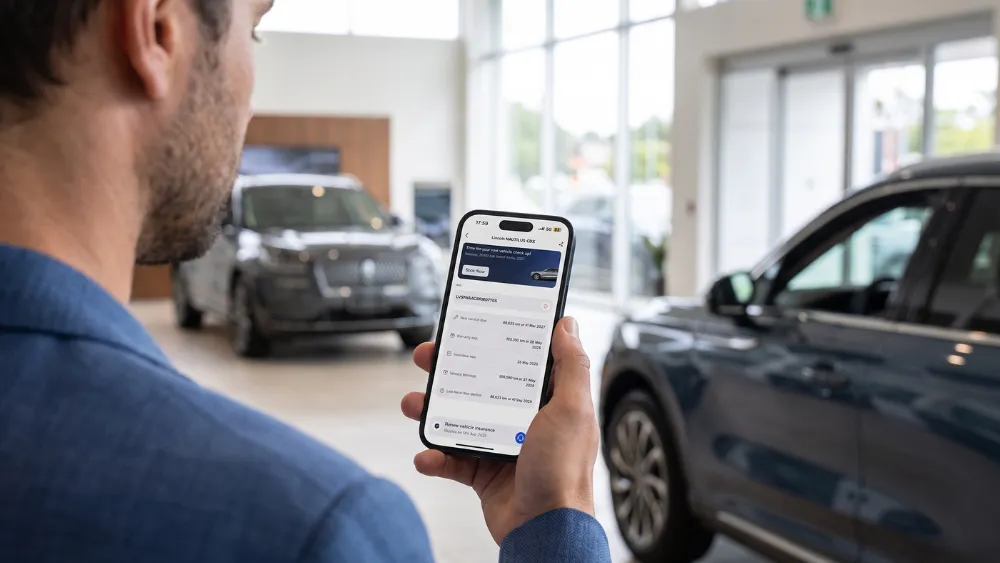
Work out your monthly payment before you start negotiating.
Step 2: GCC or imported: why we advise against US-spec cars
You’ll see “GCC spec” on most listings, and it’s the first thing worth understanding. GCC-spec cars are built by the manufacturer specifically for the Gulf market, with stronger cooling, heavier-duty air conditioning and better protection against dust and rust. Parts are easier to find, and these cars sell on more easily when it’s your turn to move on. See our full breakdown of GCC vs American spec cars if you want the technical details behind this.
Here’s our honest advice on US-specs and other imports: avoid them, unless you can prove the car’s history with real documents and have it checked by more than one independent expert.
A price well below a comparable GCC-specs car isn’t a lucky find, it’s a warning. Think of it like a sealed, current-model laptop offered at half the shop price. You wouldn’t jump on the discount, you’d ask what’s wrong with it first. The same logic applies to cars.
What looks fine on the surface can hide a lot underneath.
Here’s what can sit behind that low price:
Where the cars come from. Some American-spec cars are bought at insurance auctions, many after floods, accidents or a total-loss write-off.
Repairs you can’t see. The frame, wiring and airbags no longer protect you the way they’re supposed to.
Registration doesn’t clear the car. A local chassis inspection doesn’t check the car’s original US title status.
Some cars shouldn’t be here at all.UAE national requirements prohibit importing, licensing and insuring certain categories of damaged used vehicles, including flooded and burnt-out ones.
The savings come back to bite you. Insurers charge more for non-GCC cars, banks are often reluctant to lend, and resale values are lower.
None of this means every imported car is bad. It means you usually can’t tell which one is which from the outside, and that’s the real risk. If you’re still considering one, don’t skip the extra steps marked “Imported cars” in sections 4, 5 and 7.
The safest choice is a GCC-spec car with a verified history, an independent inspection and a valid warranty from the official dealer.
Step 3: Find the car and check the seller
Cars in Dubai are sold by dealers and private owners. A dealer can offer a warranty and often handles the paperwork for you. A private seller might be cheaper, but every check becomes your job. Either way, you’re vetting the person as much as the car.
Ask for the registration card (Mulkiya), the service records and the chassis number. A dealer should be able to show its trade licence. A private seller should show their Emirates ID, so you can confirm they’re actually the registered owner.
A genuine seller won’t hesitate to show you this.
Then make sure everything lines up. The name on the Mulkiya has to be the seller’s, and the plate, model, colour and year need to match the car sitting in front of you. Any mismatch, and you walk away.
Other reasons to walk away:
the price is far below similar cars
the seller won’t share the chassis number or won’t meet you in person
you’re being pushed to pay a deposit before you’ve even seen the car
the papers are in someone else’s name, or the seller is “selling for a friend”
Step 4: Check the car’s history
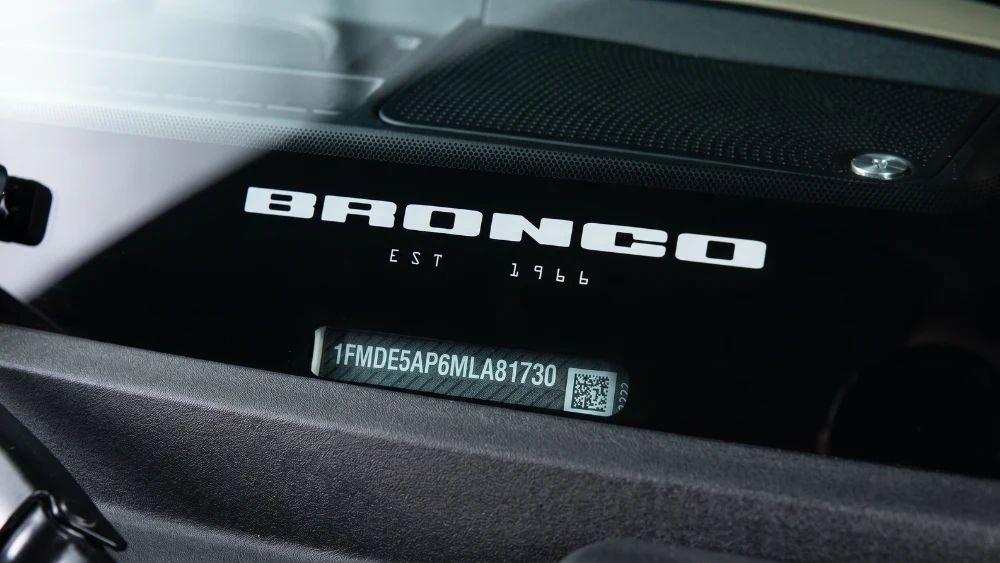
Start with the chassis number (VIN), the 17-character code stamped on the car and printed on the registration card. Almost every history check runs off it.
Dubai-registered cars: the RTA offers a paid vehicle history report covering accidents, inspections, mileage and ownership.
Other emirates: the Emirates Vehicle Gate (EVG) and the Ministry of Interior provide accident records, some of them free.
Fines: check unpaid fines on the Dubai Police website or app, or through the RTA.
A clean report is reassuring, but it’s not a guarantee. Some accidents in the UAE are never officially reported, and get repaired privately. Structural damage sometimes only shows up once a professional actually inspects the car.
This 17-character code is where every history check starts.
Imported cars: extra steps
Ask for the original title and import papers, and run an international VIN report (Carfax or AutoCheck for US cars). A salvage, flood, fire or total-loss brand is a reason to walk away, full stop.
Confirm the car is eligible for the UAE traffic system. The Ministry of Industry and Advanced Technology offers a Product Status Statement service, and a product label card confirming the car is free of the damage categories that affect road safety. Ask the seller for both.
Match the VIN on the registration card, on the car itself and in the engine bay, and compare the manufacturing date on the door sticker with the registration year. Any mismatch means you stop right there.
Step 5: Inspect and test drive
This is the step people rush, and it’s usually the one that costs the most when you do. Take the car to an independent workshop before you pay anything. A car that looks flawless can still be hiding accident repairs under a fresh coat of paint. While you’re at it, check a few things yourself:
Air conditioning: it should cool strongly within a few minutes, with the car idling.
Temperature gauge: it should hold steady in traffic and on the highway.
Paint and panels: look for mismatched colour, uneven gaps or overspray.
Tyres: check their age, any uneven wear and the brand.
Service history: it should match the mileage on the dashboard.
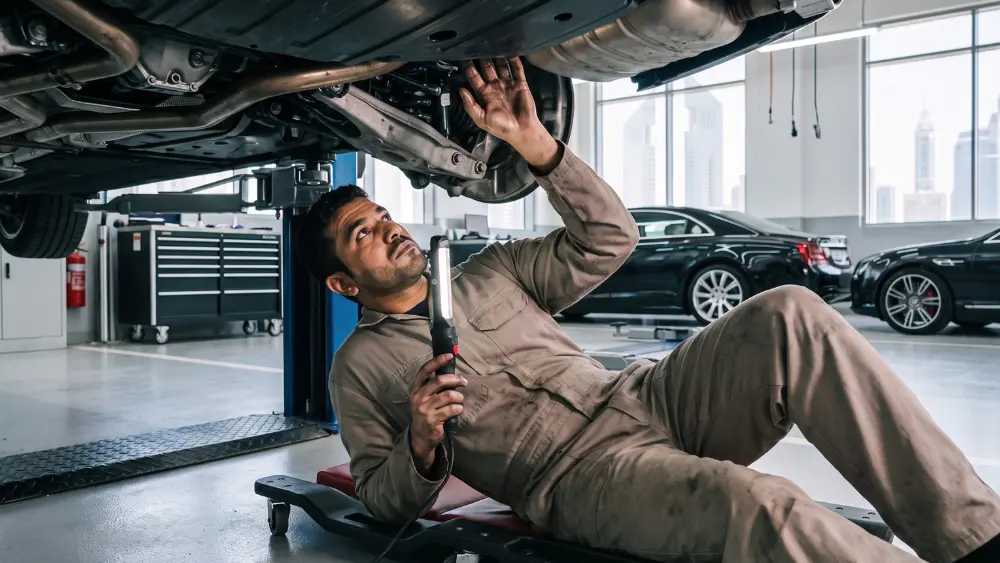
Underneath and under the bonnet: look for leaks, rust and any sign of flood damage.
Drive it on both a highway and city roads. A car can hide a lot at 40 km/h that shows up at 120.
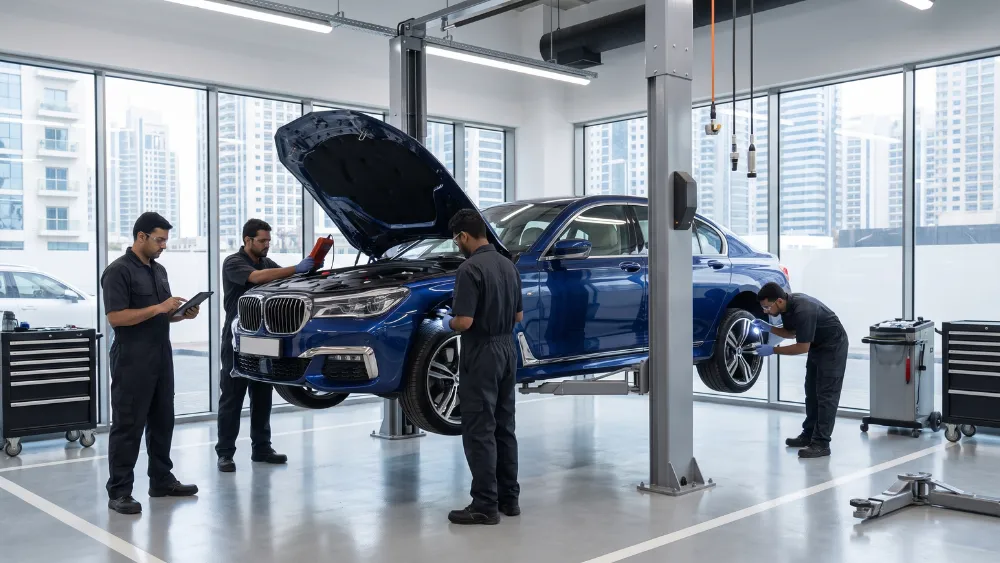
An independent inspection catches what a test drive can’t.
Imported cars: extra steps
Choose the inspector yourself, not whoever the seller suggests. Ask for a written report with photos, paint-thickness readings and a proper check of the frame and gearbox.
Get a second opinion from a workshop that specialises in the brand. One “car is fine” verdict should never be your only protection, history reports only show what was recorded, and inspection quality varies more than people assume.
Step 6: Check what the warranty really covers
A warranty only has real weight when it comes from the brand’s official dealer, the agency, and is still valid.
Many manufacturers let the remaining warranty transfer to the next owner, which means a young car with valid factory cover is about the strongest protection a used car can offer you.
Don’t just take the seller’s word for it. Contact the official dealer with the car’s VIN and confirm in writing:
how much of the warranty remains, in time and kilometres
that it hasn’t been voided. Accident repairs outside the authorised network, unapproved modifications, mileage inconsistencies or unfinished recall work can all void or block cover
that it transfers to you as the new owner, and exactly what it covers
A five-minute call to the dealer can save you a very expensive mistake.
Cars imported from other markets may have limited factory cover here, or none at all.
A cheap third-party plan is a different animal entirely. A “warranty” sold for a few hundred dirhams shouldn’t be treated as real cover. It’s unlikely to pay out for a major repair like an engine or gearbox.
Ask exactly what it would actually pay for, and read the full contract, not the certificate.
For the full picture, including how Certified Pre-Owned warranties work, what voids a manufacturer warranty, and why most third-party plans don’t pay out the way they’re sold, see our complete guide to used car warranty in the UAE.
Imported cars: extra step
Ask your bank and your insurer, in writing, whether they’ll finance and cover this exact car before you pay anything. Both are often reluctant with US imports.
Step 7: Arrange financing
Get pre-approval from your bank before you start negotiating, so you know your real budget going in, not the number you’re hoping for. A few things worth knowing:
Central Bank rules cap a car loan at 80% of the vehicle’s value, so at least 20% has to come from you. For used cars, many banks lend less, often around 70%, which means a 30% down payment. That’s bank policy, not a fixed national rule, so it’s worth shopping around.
Your total monthly debt payments can’t exceed 50% of your income, and the maximum loan term is 60 months.
Many banks won’t finance older cars, so the car’s age can quietly limit your options before you even apply.
You’ll need a valid UAE driving licence to register the car in your name.
Car loans are usually advertised with flat rates, which look lower than they really are. Ask for the equivalent reducing rate or APR so you’re comparing offers properly.
For a complete overview of credit score requirements, required documents, and what “0% down payment” offers actually mean, read our guide to Used Car Loan Requirements in Dubai.
Step 8: Agree the price
Use everything you’ve learned so far: the history, what the inspection turned up, upcoming maintenance and what similar cars are going for. Get the price and conditions down in writing, including who’s covering any outstanding fines or loan on the car. And don’t hand over full payment until the paperwork in the next step is actually settled.
Step 9: Transfer ownership at the RTA
The sale isn’t legally done until the Mulkiya is reissued in the buyer’s name. Before transfer day, make sure:
Fines are cleared. The seller has to pay off all traffic fines first, and the RTA system blocks transfers with anything outstanding.
Any loan is settled. A loan against the car needs to be cleared, with a bank release (no-objection) letter in hand.
Insurance is ready. The buyer needs a policy in their own name before the transfer.
The technical test is done, if required. Cars older than three years generally need an inspection first.
The buyer has a traffic file. First-time buyers need to open one, so build in a bit of extra time and budget (see the fee table in step 1).
This is the moment that makes it official.
You can start the process online through the RTA website or app with UAE Pass, or handle it in person at a service centre. Check the RTA website for which parts can currently be done online, since this changes as the service evolves. At a centre, both parties normally attend, or the seller can give a notarised power of attorney. Bring your Emirates ID, driving licence and the car’s registration card. Fees and rules can shift, so double-check the current details on the RTA website before you go.
Used car buying mistakes to avoid in Dubai
Here are the most common mistakes buyers make when purchasing a used car in Dubai:
Paying in full before fines and any bank loan are cleared.
Buying an imported car without checking insurance and financing first.
Taking the seller’s word for it instead of running a history check and an independent inspection.
Accepting a warranty certificate or sticker without confirming it with the official dealer, reading the contract, and checking that it’s valid and hasn’t been voided.
Forgetting to budget for insurance and inspection costs.
Skipping the ownership transfer, which leaves the seller legally responsible for the car and the buyer unable to drive it legally.
Yes, as long as you check the history, inspect the car properly and complete the transfer through the RTA.
Not as a substitute for a valid manufacturer or dealer warranty. A plan sold for a few hundred dirhams is unlikely to cover a major repair, so read the full contract and ask exactly what it would pay for.
The standard transfer fee is AED 350, plus an AED 20 Knowledge & Innovation fee. Other fees depend on your situation, such as AED 170 for the technical test on cars older than three years. See the full fee table in step 1, and check current fees on the RTA website before you go.
Banks generally require at least 20% under Central Bank rules, and many ask for 30% on used cars. Some dealers advertise 0% down payment schemes, but check the terms carefully. These are usually built into the price or the loan structure rather than a genuine waiver of the deposit.
The transfer can’t go ahead until they’re paid off, so the seller needs to clear them first.
Choose GCC-spec. It’s built for local heat, and it’s easier to insure, service and resell. We advise against US-spec and other imports. A price far below a comparable GCC-spec car is a warning sign, and a repaired car’s structure and airbags can’t be judged just by looking at it. If you’re still considering one, verify the title, import papers and full history, and get more than one independent inspection.
[…] We go through exactly how to check a car’s real history, including VIN reports and what to ask the seller, in our full guide on buying a used car in Dubai. […]
Clear, practical answers for anyone buying, selling or driving a car in the UAE. From choosing between GCC and non-GCC cars to paying fines and keeping your car in shape in the heat.
Ready2Ride Motors offers a seamless used car buying experience in Dubai, with pre-inspected, accident-free vehicles and full transparency at every step. Explore our handpicked selection of GCC-spec cars and find your perfect ride today.