If you’re comparing GCC vs American spec cars UAE, you’ve probably noticed the biggest difference first: the price. American-spec cars are often significantly cheaper than comparable GCC-spec models, which can make them look like an easy way to get the same car for less.
But what explains that price difference? Some of it comes down to where and how the car was built. GCC-spec cars are designed for Gulf conditions, while American-spec cars are built for the US market. The bigger question is what happened to the car before it arrived in the UAE.
This guide focuses on American-spec cars, covering their typical differences and potential risks, as well as the checks you should make before buying one.
GCC vs American Spec Cars UAE: What Each Spec Actually Means
Car manufacturers don’t build one version of a model and ship it everywhere. They build regional variants, tuned for the climate, fuel and safety rules of each market.
GCC spec means the manufacturer engineered that specific car for the Gulf Cooperation Council region (UAE, Saudi Arabia, Qatar, Oman, Bahrain, Kuwait), for temperatures that regularly pass 45–50°C in summer.
American spec means the car was engineered for the US market, then later imported into the UAE, either brand new by a private importer or as a used car.
Same badge, same engine size on paper, different car under the skin.
The Real Differences: What’s Actually Built Differently
Cooling system. GCC-spec cars generally get a larger radiator and a cooling system sized for extended idling in heavy Dubai traffic at high ambient temperatures. An American-spec car’s cooling system is sized for a milder climate, and can run hotter here, especially stuck in traffic on a summer afternoon.
Air conditioning. GCC-spec cars usually carry a stronger AC compressor and more refrigerant capacity. This is one of the most commonly reported issues with American-spec cars in the UAE: the AC cools, but struggles to keep up on the hottest days, and components wear out faster from running at their limit.
Air and cabin filters. GCC-spec cars are fitted with filtration built for fine desert dust and sandstorms. American-spec filters aren’t designed for that, and dust exposure over time can affect both the engine and the interior.
Corrosion protection. Coastal humidity in Dubai and Abu Dhabi is harder on a car’s underside than most of the US. GCC-spec cars get extra rust protection as standard; American-spec cars often don’t.
Suspension. Some GCC-spec cars get suspension tuning adjusted for regional road conditions. This varies more by model than the other points above, so don’t assume it on every car.
Using the air conditioning in extreme heat highlights one of the practical differences to consider when comparing GCC and American spec cars.
Does this Still Matter on Newer Cars?
Worth being honest here: the gap has narrowed. Many manufacturers now build on shared global platforms, and on 2018-and-newer models the difference in raw hardware is sometimes smaller than it used to be. Regional versions of the same platform can now differ mainly in software calibration and a handful of components rather than a totally different build.
That doesn’t mean the difference has disappeared, and it doesn’t tell you anything about a specific used car’s condition or history. It just means “GCC vs American spec” is no longer the only thing to check when buying a used car here.
Why American Spec Cars Carry More Risk Here
American-spec cars aren’t unsafe by design. US safety regulations are strict in their own right. The risk isn’t the factory spec, it’s the path a lot of these specific cars take before they reach a UAE showroom.
A meaningful share of American-spec cars sold here fall into one of three groups:
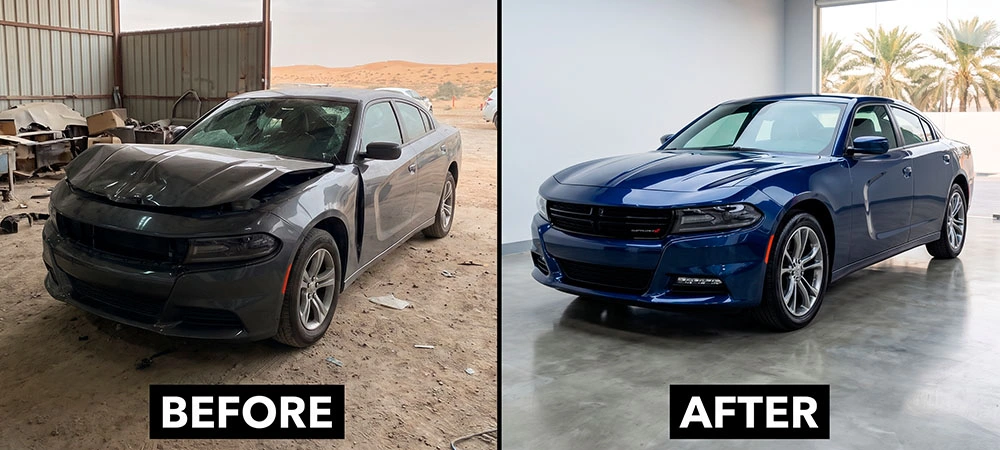
Insurance write-offs from accidents. The car is repaired, sometimes properly, sometimes cheaply, and resold. A car that’s mechanically fine can still have a chassis that was never straightened correctly, and that weakness usually isn’t visible without a proper inspection.
Flood or storm damage. US hurricane seasons produce cars with very low mileage and a clean-looking interior, but water damage to wiring and electronics that can surface months later.
Recovered stolen vehicles. Less common, and usually in better condition than the first two categories, but still worth verifying.
A repaired car restored to a clean, presentable condition for resale.
None of this means every American-spec car on the market has this history. It means you can’t tell which one is which just by looking, and a price well below a comparable GCC-spec car is the clearest signal something is being absorbed into that price, usually the cost of repairs that were never done properly.
Don’t rely on the seller telling you. Check for yourself:
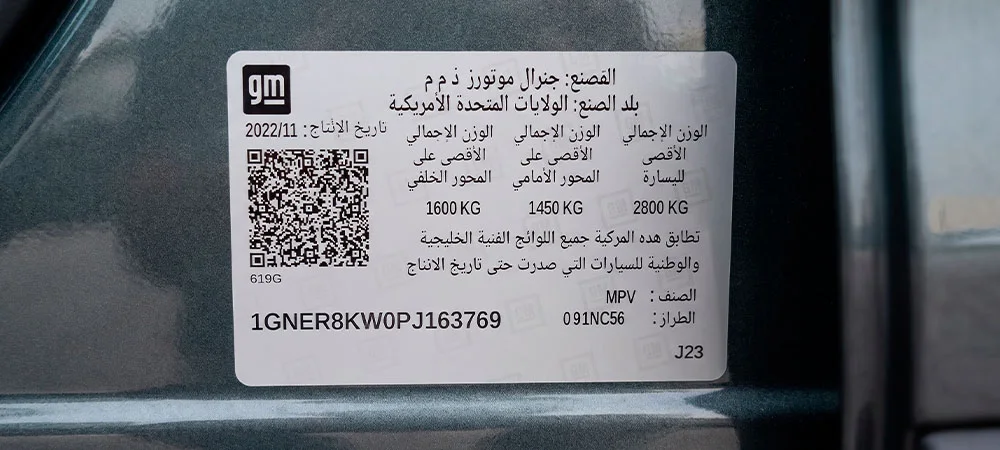
VIN / chassis number. The 17-character code on the car and on the registration card can help confirm origin when cross-checked with an international report (Carfax or AutoCheck for US cars).
GCC specification badge or certificate. Many GCC-spec cars carry a manufacturer badge or documentation confirming regional specification.
For imported cars, the Ministry of Industry and Advanced Technology can confirm a vehicle’s eligibility through its Product Status Statement service.
Door sticker. The manufacturing plate usually shows the market the car was built for.
Service history. A car serviced exclusively at UAE agency dealers from new is a strong sign it’s genuinely GCC-spec.
Ask the dealer to confirm in writing, not just verbally.
The VIN label on the driver’s door provides key vehicle identification details that can help verify a car’s origin.
To be fair, not everyone’s experience is bad. Some owners have run American-spec cars for years without major issues, and any car, regardless of origin, can turn out to be unreliable. The point isn’t that every American-spec car is a problem, it’s that you can’t tell which one you’re looking at without checking, and a proper pre-purchase inspection (PPI) is the one step that actually protects you.
Insurance, Resale Value and Warranty
Insurance: insurers in the UAE often price American-spec cars higher, or restrict cover on older imports, because of the risks above.
Resale value: GCC-spec cars generally hold their value better here and sell on faster.
Warranty: a GCC-spec car is more likely to carry a valid, transferable manufacturer warranty from the UAE agency. American-spec cars often have limited or no local factory warranty. We cover exactly what to check with the dealer in step 6 of our buying guide.
So Which one Should You Buy?
For most buyers in Dubai, GCC-spec is the safer, lower-hassle choice: it’s built for the climate, easier to insure, easier to service and easier to resell.
An American-spec car isn’t automatically a bad car, but it puts more work on you. If you’re considering one, verify the spec, the title and the full history, and get an independent inspection before you pay, not after.
GCC-spec cars are built by the manufacturer for Gulf climate and regulations, with stronger cooling, AC and dust protection. American-spec cars are built for the US market and often need extra checks and upkeep to handle UAE summers reliably.
For UAE conditions, yes, in most practical respects: cooling, AC durability, insurance and resale value. An American-spec car isn’t automatically unsafe, but it needs more verification before you buy.
Check the VIN against an international history report, look for a GCC specification badge or certificate, check the door sticker, and review the UAE service history. Ask the seller or dealer to confirm the spec in writing.
The gap has narrowed on newer global platforms (2018 onward), but it hasn’t disappeared, and it says nothing about an individual car’s accident or repair history.
[…] easier to find, and these cars sell on more easily when it’s your turn to move on. See our full breakdown of GCC vs American spec cars if you want the technical details behind […]
Clear, practical answers for anyone buying, selling or driving a car in the UAE. From choosing between GCC and non-GCC cars to paying fines and keeping your car in shape in the heat.
Ready2Ride Motors offers a seamless used car buying experience in Dubai, with pre-inspected, accident-free vehicles and full transparency at every step. Explore our handpicked selection of GCC-spec cars and find your perfect ride today.