Most people who sell a car in Dubai run into trouble for one of two reasons. Either they skip a step the RTA actually requires, or they trust the wrong buyer at the wrong moment.
Here’s how to sell your car in Dubai properly, priced right, prepared right, and without falling for one of the payment scams that Dubai car sellers need to watch out for.
Quick answer: Clear any outstanding fines, check whether the car needs a technical inspection, and settle any existing loan before starting the ownership transfer. Once you’ve agreed on a price, complete the transfer through RTA and do not hand over the car until the payment has been confirmed.
What you’ll need before you start
If you’re new to the UAE, the document that matters most here is the Mulkiya. It’s the car’s registration card, and it does the same job a title or logbook does back home. You’ll hear the word constantly, so it helps to know it early.
Emirates ID and any bank mortgage-release documents must be ready as well. The buyer will also need their identification and insurance for registration. An inspection may be required depending on the vehicle and transaction.

Step 1: Clear your fines and check the Salik account
Before selling your car, check for any outstanding traffic fines. Unpaid fines can prevent or delay the ownership transfer, so make sure they are cleared before you go to the RTA or an approved vehicle registration centre.
Check for speeding, parking, Salik and other traffic fines linked to your traffic file. Also make sure there are no other restrictions or blockers that could stop the transfer.
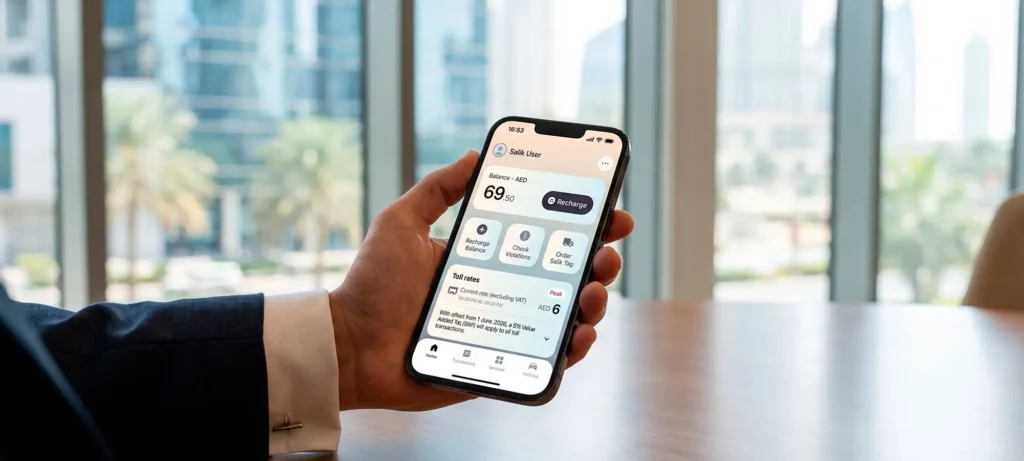
Your positive Salik balance is linked to your Salik account, not the car. If you have other vehicles on the same account, the balance remains available for that account after you remove the sold vehicle.
Once the sale is agreed, deactivate the Salik tag and remove it from the windscreen. The tag cannot be transferred to the new owner, who will need their own Salik account and tag.
Step 2: Know the inspection exemption trap
New GCC spec cars are normally exempt from technical inspection for their first three years.
Here’s what catches people out: that exemption ends the moment ownership changes hands, even if the car is only a few months old.
The exemption applies only if you are the first owner and the car was purchased from an authorised dealer in the UAE. The three-year period starts from the year of manufacture or registration, whichever comes first.
If you are the second owner, the exemption no longer applies, even if the car is less than three years old. A sale creates a new traffic file for the buyer in the RTA system, and a new traffic file requires a passing inspection regardless of the car’s age.
So if you’re selling or buying a nearly new used car, don’t assume its age means an inspection isn’t required.
Step 3: Settle any outstanding loan
If a bank financed the car, its name sits in the Mortgage By field on your Mulkiya, and the car can’t be transferred while that’s active. Once the loan is settled, the bank must release the mortgage electronically before the transfer can go through.
Step 4: Sell your car in Dubai for what it is actually worth
Before you list anything, get a realistic number in your head. A few things move the price more than people expect.
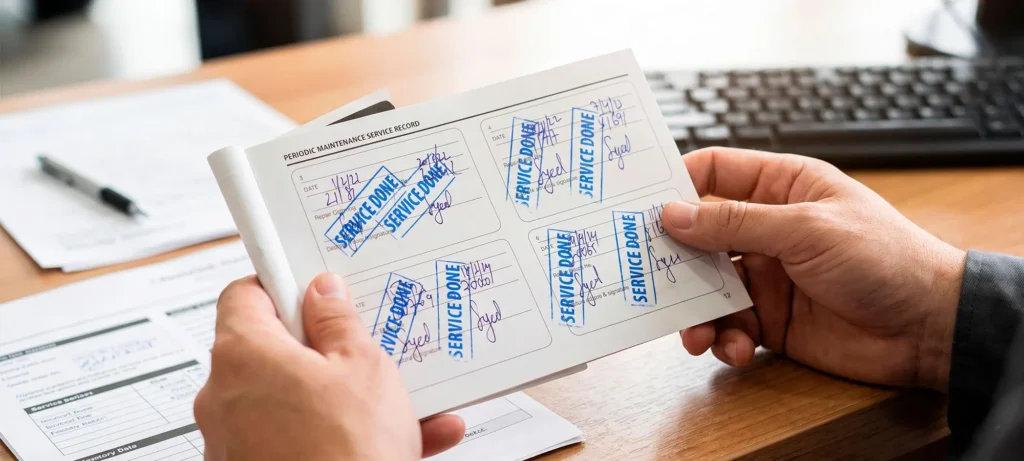
A full documented service history can make a significant difference to resale value. A car serviced at an official agency, even after the warranty and any service contract have expired, holds its value noticeably better than one with gaps in the paperwork, even at higher mileage.
GCC spec cars sell for more and sell faster than imports. We go into exactly why in our guide to GCC versus American spec cars.
Accident history matters, but how much depends on the damage. A documented accident doesn’t mean you can’t get a fair price, it means you should price a little below equivalent accident free listings rather than fight the market on it.
Mileage affects value too, though a well maintained car with heavier mileage and strong agency records can still outprice a lower mileage car with no history behind it.
To land on a realistic number, look at what identical cars are actually listed for, and how long those listings have been sitting unsold, that tells you whether the asking prices around you are realistic or wishful. Getting quotes from a few different buyers is useful too, just remember each one prices in their own margin, so the average across several is usually closer to the truth than any single quote.
Step 5: Understand the VAT rules
Here’s one piece of good news. If you’re selling your own car as a one-off private sale, you do not charge or pay VAT. The UAE’s tax authority treats this as a personal transaction, not a business activity.
VAT rules can be different if you’re buying and selling cars as a business or carrying out an economic activity, depending on the applicable registration and tax rules.
Step 6: Get the car ready before you list it
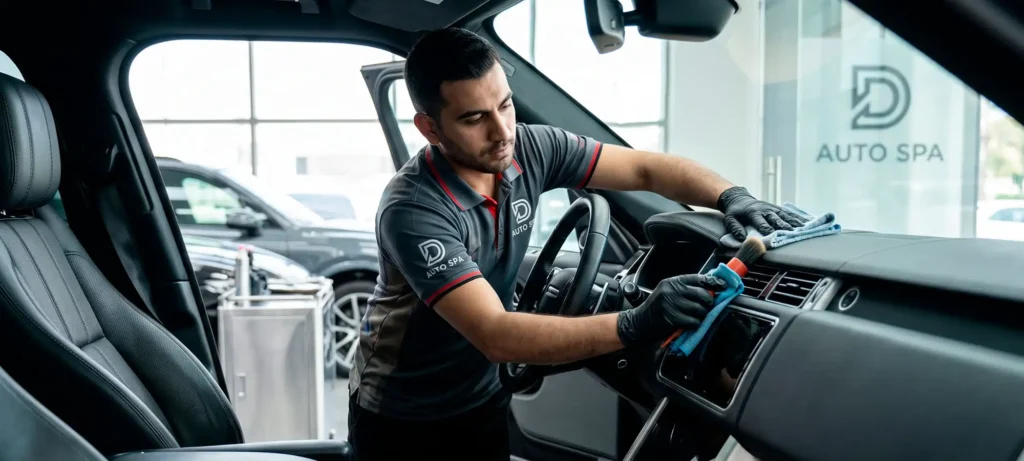
A full interior detail and an exterior polish go a long way toward the price you can actually ask for. If a service is due, get it done before you list, not after a buyer points it out.
One local detail worth knowing if you haven’t lived through a Dubai summer yet: Dubai’s heat can shorten battery life considerably, so check the battery before listing the car, a dead battery at a viewing kills momentum fast.
The bigger principle is this. Fix what you know is wrong before the buyer does their own inspection. Most serious buyers will take the car for an independent check before paying, and if something turns up that you clearly knew about and didn’t mention, it doesn’t just cost you that repair, it makes the buyer question everything else you’ve told them, and your negotiating position collapses.
Step 7: Choose where to sell
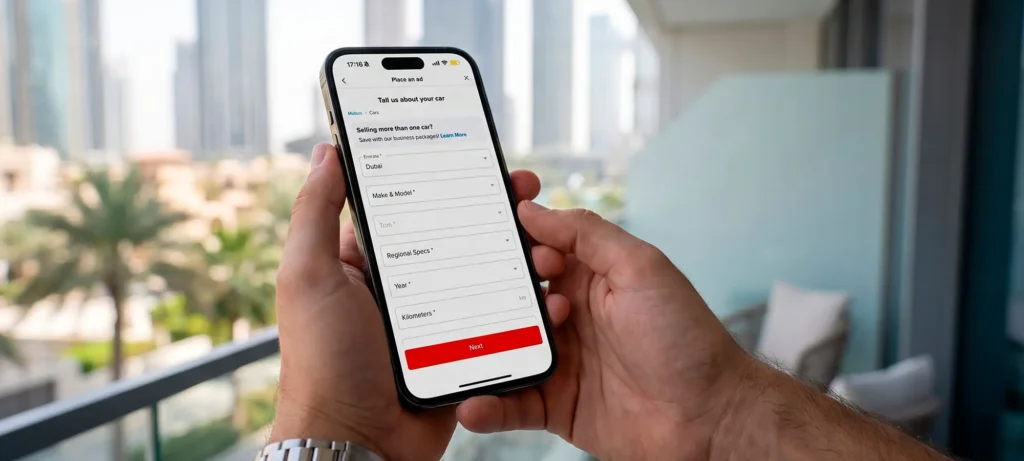
You’ve got a few real options. Listing privately on a classifieds platform can get you the highest price, but it takes the most time and puts the scam risk entirely on you. You also need to factor in the cost of listing the car: paid ads can be expensive, and if the car takes months to sell, repeated listing or renewal fees can eat into the extra money you hoped to make.
Selling to a dealer or taking an instant cash offer is faster and safer, at the cost of some margin. See how an instant cash offer works at Ready2Ride Mototrs, including if there’s still finance on the car.
Neither option is wrong, it comes down to how much time you have and how much risk you’re willing to carry for a better price.
Step 8: Watch out for the fake cheque scam
One of the most serious scams private car sellers in Dubai should be aware of involves fake or forged cheques. The scam usually follows a recognisable pattern, so knowing the warning signs can help you avoid losing both the car and the money.
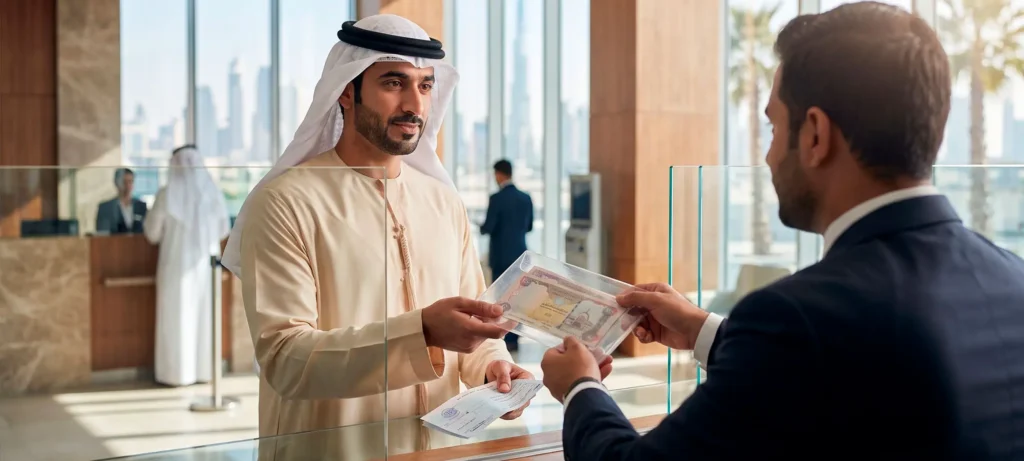
A buyer found through a classifieds platform insists on meeting late in the day, often right before a weekend or holiday, then hands over a cheque or payment receipt that turns out to be fake, worthless, or simply pending. By the time it bounces, the ownership transfer is already done and the car is gone.
The rule that protects you is simple. Never release ownership of your car until the money is actually confirmed in your account, not promised, not pending, not under collection. Cash in hand is safest. If a buyer insists on a cheque, go to the bank together and watch it clear before you go anywhere near the RTA.
This scam has enough specific warning signs, the excuses buyers use, the timing they rely on, exactly what the fake payment looks like, that it’s worth understanding in full before you list your car. We break the whole pattern down, with real examples, in our dedicated guide to avoiding car selling scams in Dubai.
Step 9: Transfer ownership through the RTA
Once you’ve agreed on the sale, you have two ways to transfer the car to the buyer.
Online. If the car has already passed the RTA inspection and the buyer has purchased insurance, you can start the ownership transfer online through the RTA vehicle ownership transfer service. The inspection and insurance should appear electronically in the RTA system, an RTA passing certificate is valid for 30 days. You and the buyer can then complete the Sale and Purchase Agreement online and follow the remaining RTA steps. The online agreement is valid for 14 days.
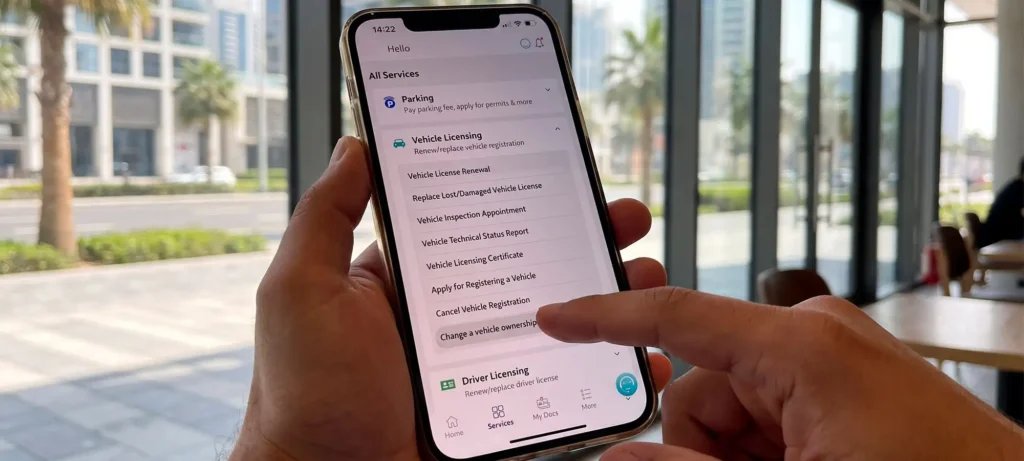
In person. If the inspection or insurance has not been completed yet, it is usually easier to go together to an RTA Vehicle Registration and Inspection Centre. The car can be inspected, and once the requirements are met, you can complete the ownership transfer there. The seller hands over the existing plates, and the buyer receives the vehicle registration in their name and new plates.
Check the current requirements and fees on the RTA’s official ownership transfer page before you go, as requirements and government fees can change.
Step 10: Selling to a buyer in another emirate
If your buyer lives in another emirate, the process is different from a standard Dubai-to-Dubai ownership transfer. RTA issues a Transfer Certificate for vehicles moving from Dubai to another emirate, and the Dubai registration is cancelled as part of the process.
It’s a longer road than a standard local sale, with its own paperwork and its own order of operations. We walk through it fully in a separate guide for sellers in exactly this situation.
Ready to Sell?
If you’d rather skip the listing, the viewings and the risk, see how selling your car to us works, including if there’s still finance on it. Looking for your next car? Browse our current cars for sale or check our complete guide to buying a used car in Dubai for the other side of this process.