The car looks great, the price seems fair, and the seller has all the right answers. None of that tells you what actually happened to this car before you walked in.
Learning to check car history in the UAE only takes about ten minutes, and most of it costs nothing. Here’s where to look, what each tool actually shows, and the one thing none of them will ever catch.
Quick answer: grab the VIN first. For a Dubai-registered car, start with the free MOI check, then pay for the full RTA report if you want more detail. Registered elsewhere in the UAE, use Emirates Vehicle Gate instead. If the car is US-origin, skip the local tools entirely and go straight to NHTSA and a Carfax report.
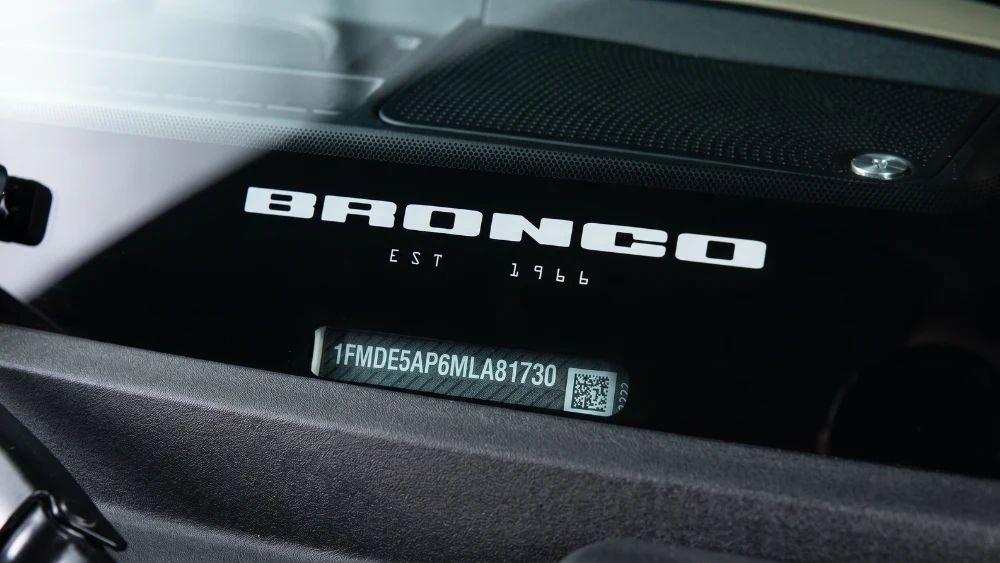
Every tool on this list runs off one number: the VIN, also called the chassis number. It’s the 17-character code printed on the registration card and stamped somewhere on the car itself.
You can check a car’s chassis number online for free, and for a couple of these tools, you don’t even need the seller’s involvement to do it.
This 17-character code is where every history check starts.
Free ways to check car history in the UAE
The Ministry of Interior’s accident inquiry portal is the fastest place to start. Enter the VIN, no login needed, and you’ll see any recorded accident dates and locations within about thirty seconds.
If the car is registered outside Dubai, such as in Abu Dhabi, Sharjah, or another emirate, you can check its accident history using the VIN or chassis number through the Emirates Vehicle Gate portal. For vehicles registered in Abu Dhabi, you can also use the Abu Dhabi Police e-Services accident inquiry page. These services can help you check a vehicle’s recorded accident history before buying.
No login, no paperwork — just the VIN.
Either way, this free check is your first filter. It won’t tell you everything, but it takes five minutes and rules out the obvious problems.
Get a full vehicle history report from the RTA
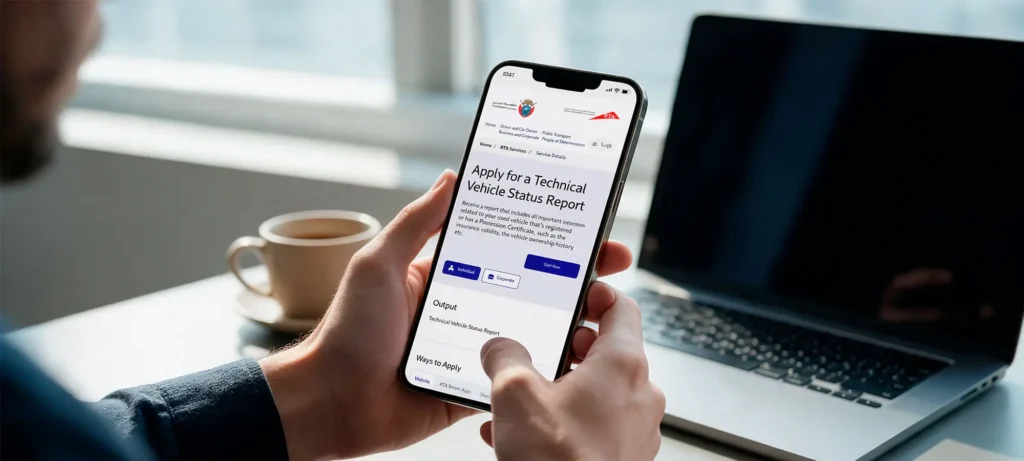
The free checks give you a yes-or-no on accidents. The RTA’s Technical Vehicle Status Report gets you the fuller story, inspection history, mileage readings over time, and how many owners the car has had.
It costs AED 120 in total, that’s a AED 100 report fee plus the standard AED 20 Knowledge and Innovation fee you’ll see on most RTA services.
There’s one catch worth knowing before you request it. The current owner has to approve the request by confirming a code sent to their phone, so this only works with a cooperative seller.
A US-origin car needs a different VIN history lookup
Here’s something most buyers don’t realise. MOI, RTA and EVG only know about what happened to a car inside the UAE. A car that was in a flood in Texas or wrecked in Florida can pass every one of those checks with a perfectly clean result.
We go deeper into why this is such a common issue with American imports specifically in our GCC vs American spec guide. For the VIN check itself, you’ll need a different set of tools.
NHTSA’s recall lookup is free and official. It only shows open safety recalls, not accidents, so treat it as one piece of a bigger picture.
NICB VINCheck is also free, and more useful for this purpose. It flags US theft records and total-loss write-offs, which is often exactly where a salvage car first shows up on paper.
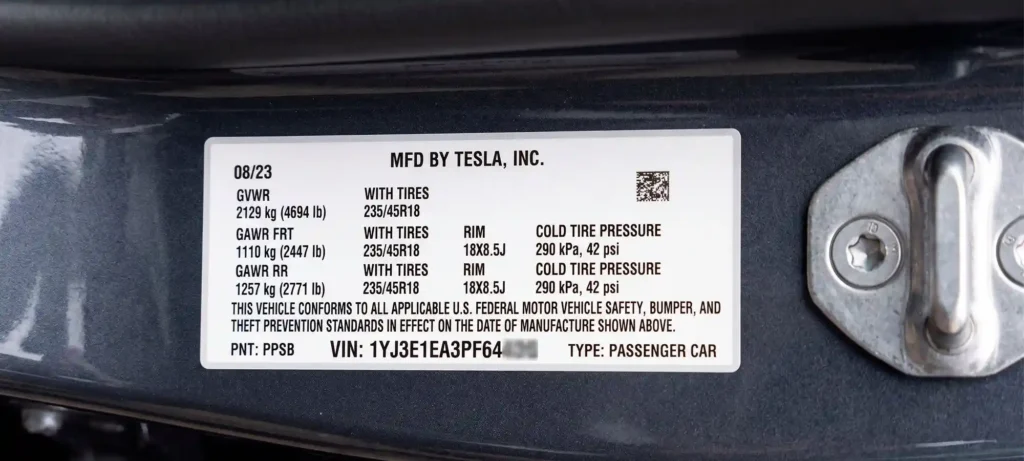
This plate holds the full story, but only the right tools can read it.
For the complete history, accidents, flood damage, odometer mismatches, you’ll need a paid Carfax or AutoCheck report. It’s not free, but on a US-spec car, it’s the one check that actually protects you.
Is a free car history report ever enough?
Sometimes, sometimes not. A free check is a solid first filter for any UAE-registered car, and it can rule out obvious red flags in seconds.
But if you see “free car history report” advertised for an American import, treat it with some skepticism. Free almost always means recalls or theft flags only, not the full accident and title history that would actually change your decision.
Check the vehicle service history too
A VIN report tells you what happened to the car. The vehicle service history tells you how it was treated.
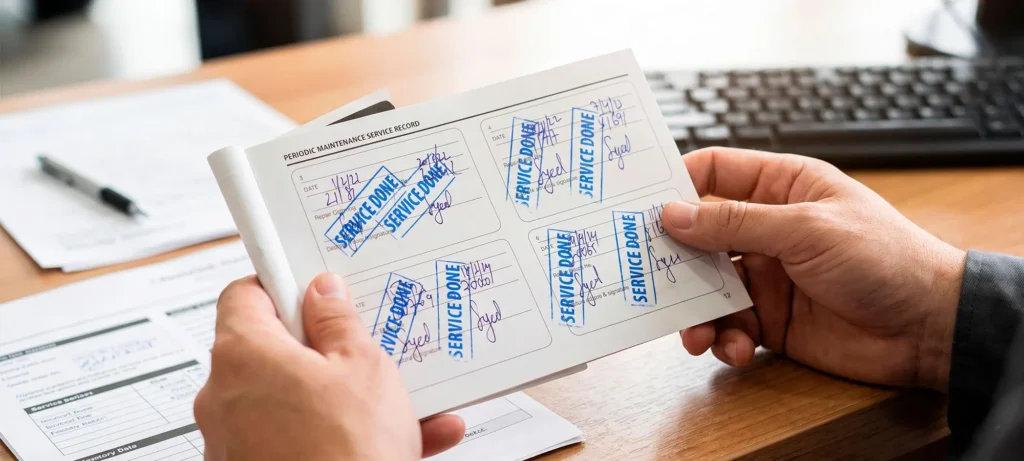
Ask for maintenance records, ideally from a UAE agency dealer. A full service history is one of the strongest signs you’re looking at a well-cared-for car.
It can also catch something a VIN report never will, mileage that doesn’t add up between one service visit and the next.
Every stamp tells you the car was where it was supposed to be.
What a report won’t ever show you
This is the part that matters most. If an accident in the UAE was never reported to the police, it simply doesn’t exist on paper, not on MOI, not on RTA, nowhere.
Garages here aren’t legally allowed to repair accident damage without a police report on file. In practice, though, some owners route around that through unlicensed body shops that skip the paperwork entirely.
That’s exactly why a clean VIN check should be your starting point, not your finish line. Pair it with the independent inspection we walk through in our complete buying guide.
If something still feels off after that, a comprehensive chassis test at a centre like Tasjeel goes further, at roughly AED 370. It’s a different service from the standard AED 170 technical inspection required for annual registration, and it’s worth the extra cost when you need real certainty.
Red flags worth chasing down
A few things are worth a direct question to the seller before you go any further.
Mileage that doesn’t match between reports is one. So is a string of several owners in a short window, or a mortgage still sitting against the car, which needs clearing before any transfer can happen (we cover exactly how in our financing guide).
Salvage or flood flags on a US report, or open recalls nobody’s fixed, both deserve the same treatment. None of these mean walk away on the spot, but they do mean you ask, then verify, before any money changes hands.
Start with the VIN. Use the free MOI check for Dubai-registered cars, EVG for other emirates, then request a paid RTA report if you want the full picture.
The basic MOI check is free. The detailed RTA report costs AED 120, and neither one will show an accident that was never officially reported.
The chassis number is the 17-character VIN on the registration card. NHTSA and NICB both let you check it for free, with no need for the owner’s involvement.
Not through UAE tools, they only cover what happened here. Use NHTSA for recalls, NICB for theft and salvage flags, and a paid Carfax or AutoCheck report for the full story.
How well the car’s been looked after, and whether the mileage on record matches what’s on the odometer now.
[…] an unofficial accident repair. Pair this with a VIN history check for the fullest picture, see our guide to checking car history in the UAE. If it had, the warranty likely wouldn’t still […]
[…] For the full walkthrough, free and paid tools, what a report actually shows, and what none of them will ever catch, see our complete guide to checking car history in the UAE. […]
Clear, practical answers for anyone buying, selling or driving a car in the UAE. From choosing between GCC and non-GCC cars to paying fines and keeping your car in shape in the heat.
Ready2Ride Motors offers a seamless used car buying experience in Dubai, with pre-inspected, accident-free vehicles and full transparency at every step. Explore our handpicked selection of GCC-spec cars and find your perfect ride today.