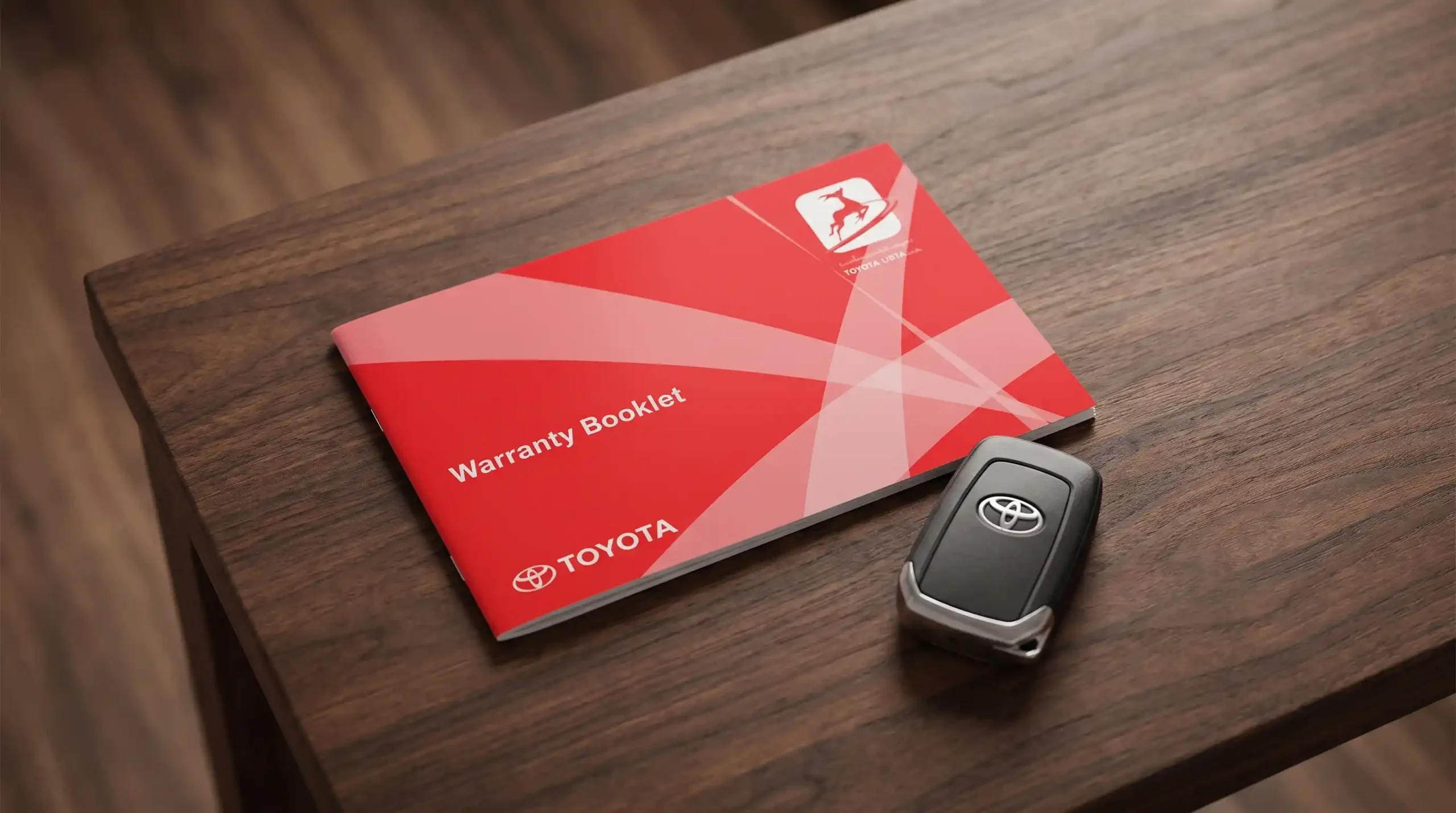
A seller hands you a warranty certificate and says relax, you’re covered. Here’s the uncomfortable truth. That piece of paper might be worth a lot, or almost nothing, and you usually can’t tell which just by looking at it.
Understanding how a used car warranty UAE dealers actually honour works, and how one slips away without you noticing, can save you a repair bill that costs more than the car’s remaining value.
Quick answer: a valid manufacturer or dealer warranty, confirmed directly with the agency, is the strongest protection a used car can come with. A cheap third party policy almost never works the way it’s sold to you. And one missed service at the wrong garage can quietly void everything.
Used car warranty UAE: what you’re actually choosing between
There are two warranties worth taking seriously, and one that usually isn’t a warranty at all.
Manufacturer warranty is the real thing. It comes from the factory, it’s honoured at any official dealer of that brand, and a used car can carry a manufacturer backed version of it too, called Certified Pre-Owned, more on that below.
Third party warranty comes from an independent insurance company with no connection to the manufacturer. It’s usually the cheapest option on paper. We’ll get to why that’s rarely the bargain it looks like.
Then there’s what dealers call a “dealer warranty,” and this one needs a closer look before you trust it with anything.
The dealer warranty trap: spoken promise or real document
If a dealer tells you, “don’t worry, bring it back if something goes wrong,” that sentence has no legal weight. In this industry, if it isn’t written on your sales contract, it doesn’t exist.
Signing a contract with an “as-is” or “with all faults” clause makes this worse. That written clause overrides anything you were told out loud, even if the salesperson meant it sincerely. And the person who promised it might not even work there next month. A new manager has no record of a conversation and no reason to honour it.
An “as is” sales agreement means the car is sold without any warranty, so check the terms before you sign.
A genuine dealer-backed warranty looks completely different. It’s a written document attached to your invoice, usually titled something like “Vehicle Warranty Terms.” It states an exact duration, often 30, 60 or 90 days, and a mileage limit, often a few thousand kilometers. It lists exactly which parts are covered, and most short-term dealer warranties only cover the engine and transmission, not the air conditioning or electronics. It also tells you exactly which garage to take the car to.
If what you’ve been offered doesn’t look like that, in writing, with those specifics, treat it as a nice gesture if it happens, not as protection you can rely on.
Certified Pre-Owned: the manufacturer-backed version
A real CPO warranty comes from the manufacturer, not the dealer selling the car. That’s the whole point of it, you can take the car to any official dealer of that brand, not just the one that sold it to you.
It usually works as a continuation. If the car still had a year left on its original factory warranty, CPO coverage picks up right after that year ends. If the factory warranty has already expired, CPO coverage starts from the day you buy the car.
CPO warranty terms differ from one company to another, so compare them before you decide.
Coverage typically comes in two parts. A shorter period covers almost everything on the car. A longer period, often extending years further, covers only the engine, transmission and other major drivetrain parts.
To qualify, the car has to pass a strict inspection, often well over a hundred points, and come with a clean history report. A dealer can’t just put a “Certified” sticker on any car and charge more for it.
That’s exactly the trap to watch for. Some independent showrooms use the word “certified” or “dealer-certified” without any backing from the actual manufacturer. If a dealer can’t confirm the certification directly with the brand, it isn’t CPO, it’s just a third party warranty wearing a more convincing name.
How long does a new car actually come with a warranty for?
Most mainstream brands in the UAE start at 3 years or 100,000 km, Toyota is a good example.
Nissan now offers 5 years with unlimited mileage on current models. Land Rover and MG both go further still, Land Rover at 5 years and 150,000 km, MG at 6 years and 200,000 km.
Electric and hybrid batteries get their own, longer clock. It’s typically 8 years or around 160,000 km, separate from the rest of the car’s coverage.
Is a 1 Million Km Warranty Worth It? Check the Fine Print
Walk into a Jetour or Soueast showroom and you’ll see numbers like 10 years or 1,000,000 km. It’s an eye catching figure, and it’s also not the whole story.
That massive number sometimes applies to the engine and transmission only. Everything else on the car, the electrics, the interior, the rest of the mechanical system, falls back to a standard 5 to 7 years.
Some showrooms advertise extra-long warranties, so always check what the offer actually covers.
Some Chinese brands genuinely do lead the market on full coverage, not just the headline engine number. Geely offers 6 to 7 years across the whole car. Chery’s Omoda and Jaecoo models come with 7 years bumper to bumper. Hongqi goes further still, 7 years with no mileage cap at all.
The catch applies to all of them equally. Miss one scheduled service, usually every 6 months or 10,000 km, at the official centre, and the clock resets to zero. Wear items like wiper blades and 12V batteries are often covered for as little as 6 months regardless of the headline number.
What actually voids a manufacturer warranty
This is the part most buyers never check, and it’s the part that matters most.
Skip a single scheduled service at the official dealer, even once, and the warranty can be voided on the spot. We’ve seen this confirmed directly by UAE dealers. Miss one interval, lose the whole thing, not just that one component.
Every stamp tells you the car was where it was supposed to be.
Get the car repaired after an accident somewhere other than the agency, and the same thing happens. The warranty is normally void from that point on.
There’s one exception worth knowing. If the accident was reported to the police and the repair went through the agency on an insurance claim, the warranty can stay valid. There’s an official paper trail the dealer can verify.
The one combination that actually protects you
If there’s one thing worth paying extra for, it’s this. A car still under a valid manufacturer warranty, real CPO cover included, with a full service history at that same agency.
Here’s why it matters more than people realise. A warranty that’s still active and confirmed by the dealer is more than future protection. It’s indirect proof the car hasn’t been through an unofficial accident repair. Pair this with a VIN history check for the fullest picture, see our guide to checking car history in the UAE. If it had, the warranty likely wouldn’t still exist.
And when the warranty is valid, the coverage isn’t a maybe. If something covered breaks and it isn’t something you did yourself, the agency fixes it. No arguing, no fine print to decode.
Confirm all of this with the dealer directly, using the VIN, not the seller’s word. Ask how much time or mileage is left. Ask whether it’s ever been voided. Ask whether it transfers to you as the new owner.
Extending the manufacturer warranty
Once the factory warranty is about to run out, most UAE agencies let you buy an extension bundled with scheduled servicing. It’s often called a service contract.
The price depends entirely on the brand, the model, and how many services are included in the package. There’s no standard rate, and quotes we’ve seen for different cars have varied enormously, even between two fairly ordinary family cars.
Ask your dealer for a quote specific to your exact car and mileage, not a number you saw mentioned somewhere else. And don’t be afraid to negotiate it down, dealers often have more room to move than the first quote suggests.
Authorized service centers help you keep and extend your manufacturer warranty.
Whether it’s worth it usually comes down to the brand. Expensive parts and labour, the kind you’ll find on German and Japanese premium models, make the peace of mind worth more. A documented service contract also tends to protect resale value better than skipping it to save money now.
Why most third party warranties don’t actually protect you
A third party warranty sounds like protection. In practice, it usually isn’t.
These contracts almost always come with a hard cap, a maximum payout tied to the car’s market value at the time of the claim rather than a fixed number. On an older car, that cap can be small enough to barely cover one real repair.
Most of them also lock you into one specific garage. Service the car anywhere else, even somewhere better or cheaper, and the warranty can be voided entirely.
Coverage frequently doesn’t start on day one either. A delay of a month or around 2,000 km from the purchase date is common. If something fails in that window, you’re paying for it yourself.
When a claim finally does come in, the incentive runs against you. The company wrote the contract and decides what counts. Owners who’ve gone through it consistently describe the same pattern. Delays, disputes, and claims denied over a clause buried in the fine print.
A warranty that costs a few hundred dirhams, caps payouts at market value, locks you to one garage, and waits a month to start isn’t really protection. It just looks like it on the certificate.
Does the warranty survive if the car crosses a border?
Most manufacturers tie a car’s warranty to the region it was sold in. Export it, and the cover usually doesn’t follow, regardless of how much time is left on paper.
Porsche is a genuine exception. Porsche’s official warranty terms state the cover is honoured worldwide at any official Porsche Centre, with no mileage limit and full transferability on a private sale.
There’s a real catch even here, though. Owners have reported Porsche centres in other countries declining to honour the warranty on cars that weren’t imported through their own official distributor. The centre simply has no way of verifying the car’s history before it arrived. Worldwide on paper doesn’t always mean worldwide in practice.
This is exactly why a car’s origin matters so much, something we cover in depth in our GCC vs American spec guide. An imported car can carry a warranty that looks valid and still get refused the moment you actually try to use it.
Before you buy, confirm the warranty actually works
Yes, always. Confirm it directly with the agency using the VIN. Don’t rely on a certificate the seller hands you.
Missing a scheduled service at the official dealer, or getting accident repairs done outside the agency network without an insurance backed claim.
For most owners, no. These policies typically cap payouts at the car’s market value, lock you into one garage, and often don’t start covering the car until a month or 2,000 km after purchase.
A warranty backed by the manufacturer itself, not just the dealer selling the car. It only applies if the car passed the brand’s official inspection, confirm this directly with the manufacturer, not the seller.
It varies enormously by brand and model. Always get a quote specific to your exact car and mileage, and don’t be afraid to negotiate it down.
Usually not. Most manufacturers tie warranty coverage to the region the car was originally sold in. Even Porsche’s worldwide warranty can be refused if the car wasn’t imported through an official distributor.
Clear, practical answers for anyone buying, selling or driving a car in the UAE. From choosing between GCC and non-GCC cars to paying fines and keeping your car in shape in the heat.
Ready2Ride Motors offers a seamless used car buying experience in Dubai, with pre-inspected, accident-free vehicles and full transparency at every step. Explore our handpicked selection of GCC-spec cars and find your perfect ride today.