



How to Get an International Driving Permit in the UAE (International Driving License 2026)
October 28, 2026
Planning to drive abroad from the UAE? Many countries and car rental companies ask for an international driving...
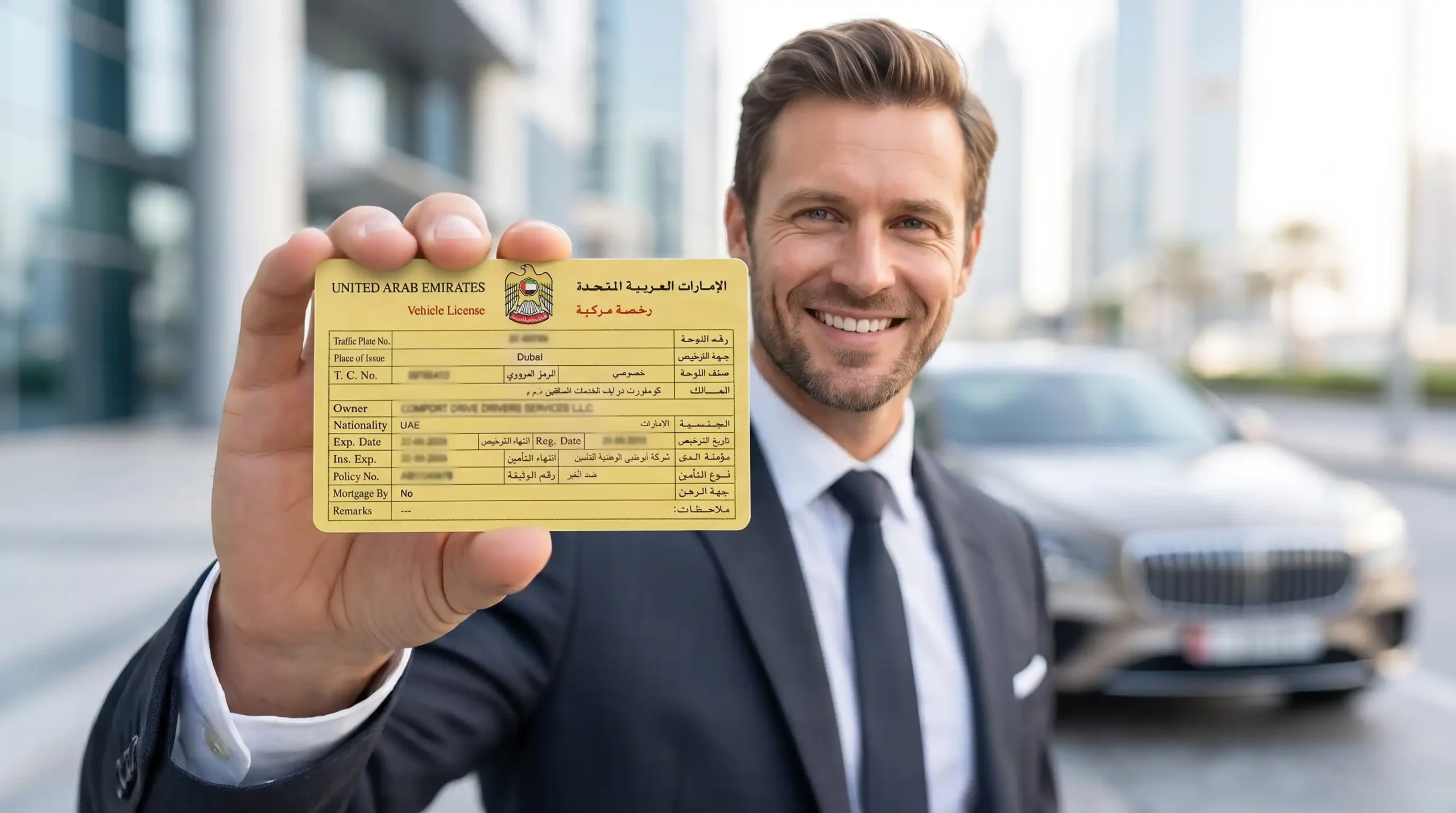
Short answer: what is Mulkiya? It is the UAE vehicle registration card. It shows that a car is registered in an owner’s name, and you need it to drive, insure, renew or sell the car.
The word is Arabic, ملكية, and it literally means ownership. Officially the UAE calls it the vehicle ownership card.
Picture this: you find a great used car, and the seller hands you a small card full of lines you cannot read. Do you nod and pay, or do you know what to look for?
Lines like Origin, engine number and Mortgage By raise the most questions.
At Ready2Ride Motors we read Mulkiya cards every day. Below we explain each part, what to check before buying, and what you get if a car has a Hayaza instead.
Mulkiya is the everyday name for the vehicle registration card, and it is the final step of registering a car.
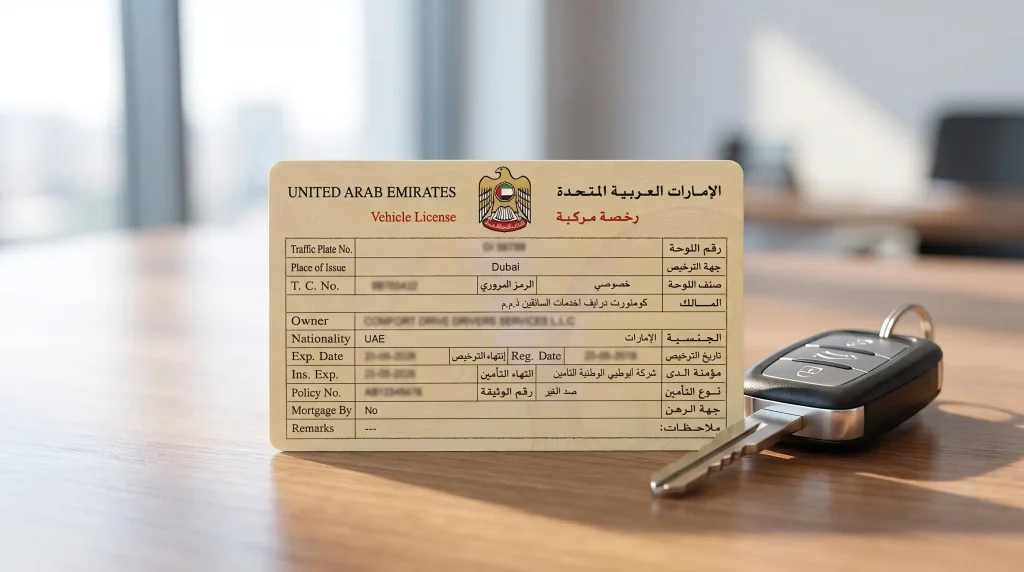
According to u.ae, once you collect the vehicle ownership card (Mulkiya) and the plate numbers, the registration is complete.
Each emirate issues it through its own traffic authority. In Dubai that is the RTA, and the same u.ae page lists the Ministry of Interior and Abu Dhabi Police as other channels.
You cannot drive a car on UAE roads unless it is registered under the traffic laws. That is why the Mulkiya is the first document we ask for when we inspect a car.
The card has two sides. The front shows the plate, the owner, the dates, the insurance and the mortgage.
The back, called Vehicle Information, shows the car itself: model, origin, color, engine and chassis.
The layout can differ between emirates and card versions, so here we use the names printed on a typical card.
| Line | What it shows | Buyer tip |
|---|---|---|
| Traffic Plate No. and Place of Issue | The plate number and the emirate that issued it | Must match the plates on the car |
| Owner, Nationality and T.C. No. | Who the car is registered to, and the owner’s traffic number | The name should match the seller’s Emirates ID |
| Exp. Date and Reg. Date | When the registration ends, and when it was first registered | Expired cards need renewal first |
| Ins. Exp. and Policy No. | The insurance expiry date, the policy number and the insurer | Ask for the current policy |
| Mortgage By | The bank, if the car has a loan | The loan must be released before a sale |
| Model and Veh. Type | Model is the model year. Veh. Type is the model name | Compare both with the advert |
| Origin | The country where the car was built | Does not show the spec |
| Eng. No. | The engine number, when filled in | A clue about a local car, not proof of spec |
| Chassis No. | The VIN of the car | Match it with the car in three places |
| Num. of Pass., Color, G.V.W. and Empty Weight | Seats, color and the weights of the car | Check they match the real car |
Many buyers read Origin as the spec of the car. That is the most common mistake we see.
Origin shows where the car was built, not which regional spec it is. In our experience, a GCC car built in the US shows United States as its origin, and a local Toyota built in Thailand shows Thailand.
The cars on our own lot show a different Origin almost every time, even though they are all GCC spec. Our guide on how to check if a car is GCC spec shows what to look at instead.
In our experience, the engine number is filled in on the Mulkiya of local UAE cars that are GCC. Cars imported from other Gulf countries usually have it blank, even though the spec is still GCC.
So a blank engine number does not mean a car is not GCC spec. It more often means the car is an import.
One more point: the Ministry of Interior lists the engine number among the details that can be changed through a service.
The card itself says that changes to vehicle or owner information must be notified to the licensing authority. So always compare the card with the real car.
So what is Mulkiya worth to a buyer? It is the fastest way to spot problems.
Ask the seller for the card, and go through both sides line by line.
If you are new to buying cars here, start with our guide to buying a used car in Dubai.

What is Mulkiya in digital form? You do not always need a plastic card.
The RTA says the Ownership e Card is an electronic document sent by email and SMS. It includes the expiry date, mortgage and insurance details.
You can show it saved on your phone or as a printed copy.
Dubai owners can also add it to the phone wallet through the RTA Dubai app. It works with Apple Wallet, and on Samsung phones with Samsung Wallet.
This is handy when you renew online. After you pay in the RTA Dubai app, you can add the Mulkiya to your wallet right away, and print it on any other day if you need paper.
The wallet version is shorter than the full document. It shows the owner, expiry date, traffic file number, chassis number, place of issue, model year and name, and a barcode.
In our experience, it does not show Origin, the engine number or the mortgage line, and the insurance date can be empty.
So if a seller shows you only the wallet card, ask for the full Ownership e Card or a printed copy. Then you can check every line from the table above.
To confirm that a document is real, the RTA offers a document validation service. It shows whether the document is still valid and has not been changed.
You do not need to start from scratch. In Dubai you can ask for a replacement card on the RTA page for renewing and amending vehicle ownership.
You log in, select the vehicle, choose Reprint Licence Card, select a delivery option, and pay the fees and any fines.
Fees change, so check the amount on the official RTA page before you apply. For cars registered in other emirates, the Ministry of Interior has its own replacement service.
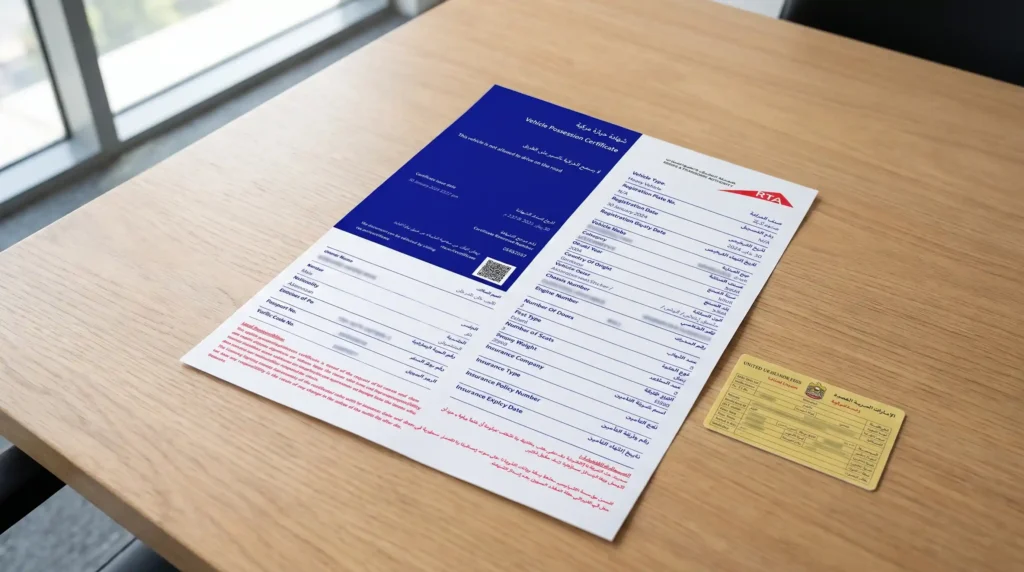
Sometimes a car comes with a Hayaza instead of a Mulkiya. You may also see it written as Hiyaza.
Officially it is called a Possession Certificate.
So what is Mulkiya compared with a Hayaza? A Mulkiya means the car is registered, and a Hayaza means it is not.
A Hayaza shows that the car is in your name and lists its details, but the car has not gone through registration.
In our experience, dealers often do this to save costs while the car waits for a buyer.
A car with a Hayaza has no plates, so you cannot drive it. In our experience, insurance is not needed until you register it.
According to the RTA, a Possession Certificate cancels the vehicle registration and makes the vehicle unfit for road circulation in Dubai. Possession can then be handed over to a new owner through the RTA service for changing vehicle possession.
Fees change, so check the amounts on those official pages. To drive the car, you then register it, which means an inspection, insurance and the registration fees, as u.ae explains.
Only during the grace period. After the registration expires you have 30 days to renew, and you can keep driving in that time as long as the car is insured.
That is why the Ministry of Interior lists 13 months of insurance among the registration conditions. The extra month covers the grace period.
Once the 30 days have passed, or the insurance has ended, you cannot drive. Our guide to RTA vehicle renewal explains how to renew.
A car with no registration at all, like a car with a Hayaza and no plates, cannot be driven at any time.
Do not pay a deposit and do not rely on photos alone. Ask for the card or the digital version from the seller, and check the name, the chassis number and the mortgage line.
If the seller offers a Hayaza instead, remember that the car is not registered yet and needs registration before it can be driven.
If you would rather start with cars we have already checked, you can browse our cars.
Found one you like? Estimate your monthly payment with our car loan calculator.
And if you are selling, see how selling your car to us works.
What is Mulkiya? It is your car’s registration card, and it is the first document to read when you buy, sell or renew a car.
Origin shows where the car was built, not the spec.
The engine number and the Mortgage By line are worth a close look.
And if a car has a Hayaza, it is not registered and cannot be driven yet.
Mulkiya is the everyday name for the UAE vehicle registration card. Officially it is called the vehicle ownership card. It shows that a car is registered in an owner's name, and you need it to drive, insure, renew or sell the car.
Origin shows the country where the car was built, not its regional spec. A GCC car built in the US shows United States as its origin and is still GCC spec.
In our experience, the engine number is filled in for local UAE cars that are GCC, and imported cars, including GCC cars from other Gulf countries, usually have it blank. A blank engine number does not mean the car is not GCC spec.
The RTA says the Ownership e Card is an electronic document sent by email and SMS, and you can show it saved on your phone or as a printed copy. Dubai owners can also add it to Apple Wallet, or to Samsung Wallet on Samsung phones, through the RTA Dubai app.
Check that the owner name matches the seller, that Model and Veh. Type match the advert, that the chassis number matches the car, that the registration has not expired, and whether a bank is named in the Mortgage By line. Treat Origin and engine number as clues, not proof of the spec.
On the card, Model is the model year of the car, and Veh. Type is the model name. Compare both with the advert before you buy.
A Hayaza, also written Hiyaza, is a Possession Certificate. It shows the car is in your name, but the car has not been registered and has no plates, so it cannot be driven. You need to register it first, which includes an inspection and insurance.
You can ask for a replacement through the RTA in Dubai or the Ministry of Interior for other emirates. Fees change, so check the amount on the official page before you apply.

