If you are selling your car in the UAE, the most dangerous buyer is often the one who makes everything easy.
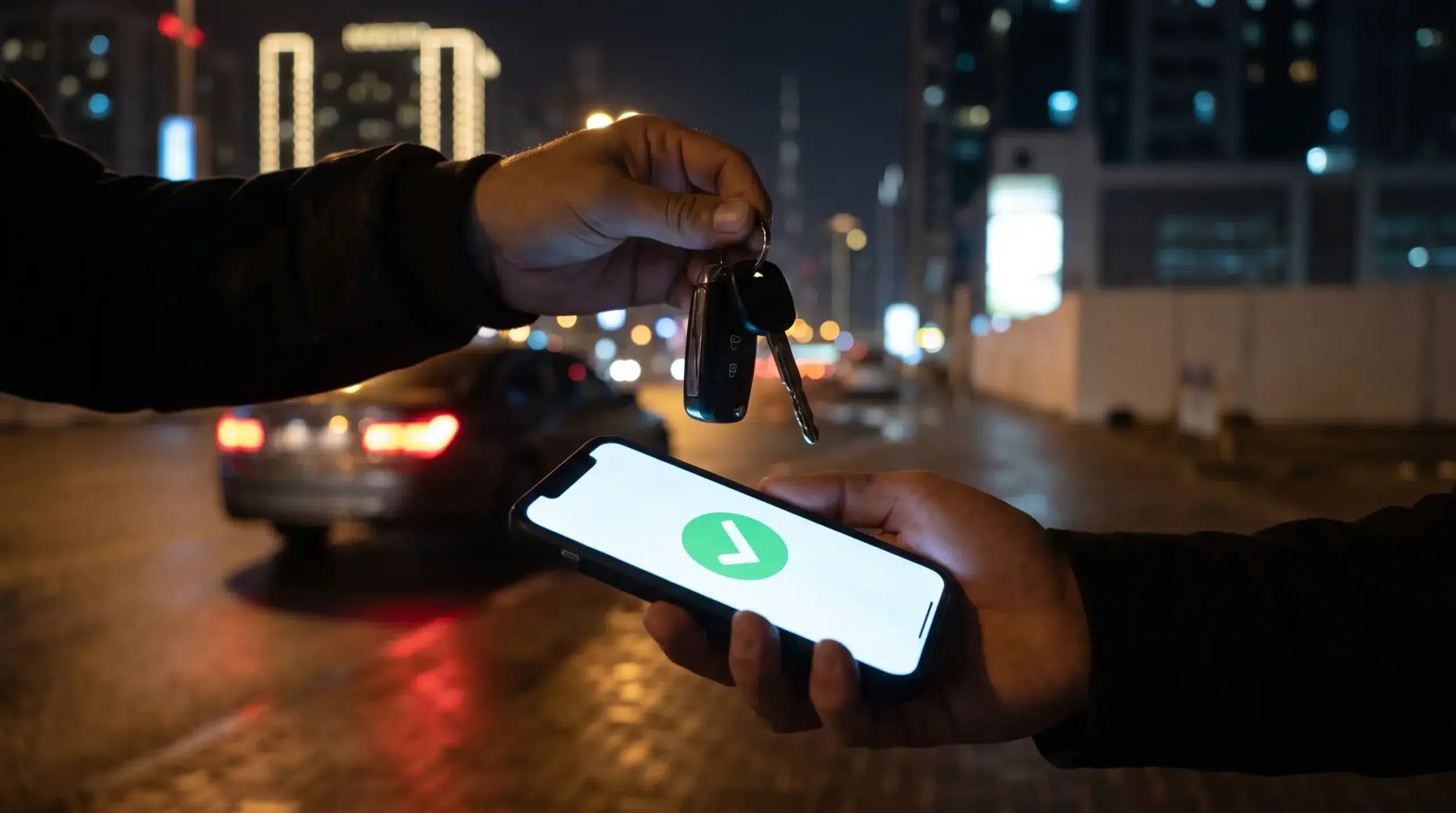
They like your car, agree on the price within minutes and show you a bank transfer on their phone. They say the money will reach your account tomorrow, so you hand over the keys and the Mulkiya, the vehicle registration card that works like the title you may know from your home country.
By the time you check your account, the buyer has disappeared with your car and the money never arrived.
A screenshot is not a payment, and the car is already gone.
This is how many car selling scams in the UAE work: the scammer poses as a buyer, and you, the seller, are the victim. This guide covers five scams that police in Dubai and Abu Dhabi have warned about or that sellers regularly report, followed by a simple routine that keeps your sale safe.
If you want the full process first, from fines to the RTA transfer, start with our guide to selling your car in Dubai.
Why Car Selling Scams Target Private Sellers in the UAE
Scammers go wherever cars are advertised, including Facebook Marketplace, Dubizzle and social media groups. Abu Dhabi Police have described one common fraud as starting when a seller announces a car for sale on social media.
A private seller has no dealer, bank or platform checking the payment for them, so every check falls on you.
Once the car and its papers have changed hands, getting them back is slow and uncertain, which is why prevention matters far more than a complaint afterwards.
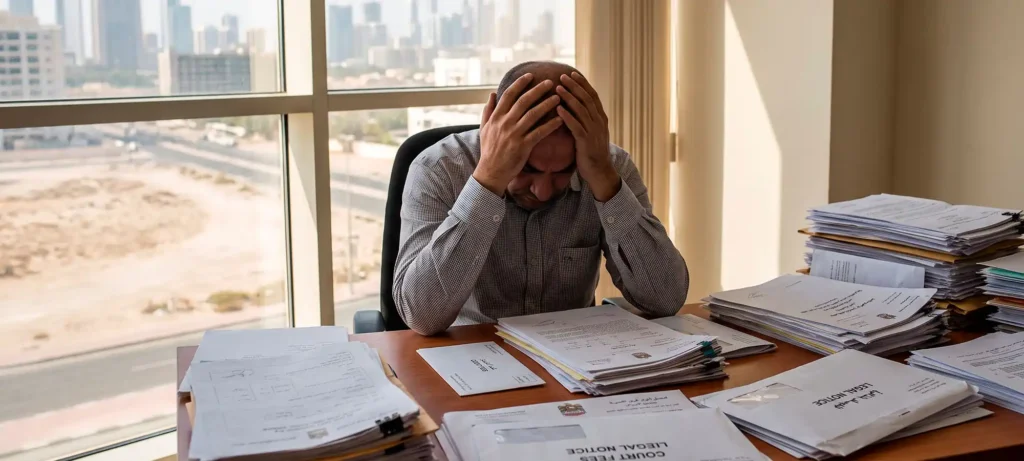
A court case can cost as much as the car, and in a long dispute even more, because legal fees and court costs keep adding up for as long as the case continues.
A seemingly small dispute can turn into an expensive legal battle if it drags on.
Winning is not guaranteed, and many sellers have little proof beyond chat messages and a screenshot.
If the buyer has disappeared, it is unclear who would pay you even after a favourable judgment. A person who ends up in prison does not necessarily have money to pay you back either.
The Dubai court case described below shows how slow this can be: the creditor needed a criminal conviction and then a separate civil ruling, and the fight stretched over several years.
Scam 1: The Fake Bank Receipt
In May 2024, Abu Dhabi Police warned residents about buyers who present false or deferred bank receipts when paying for cars and other items.
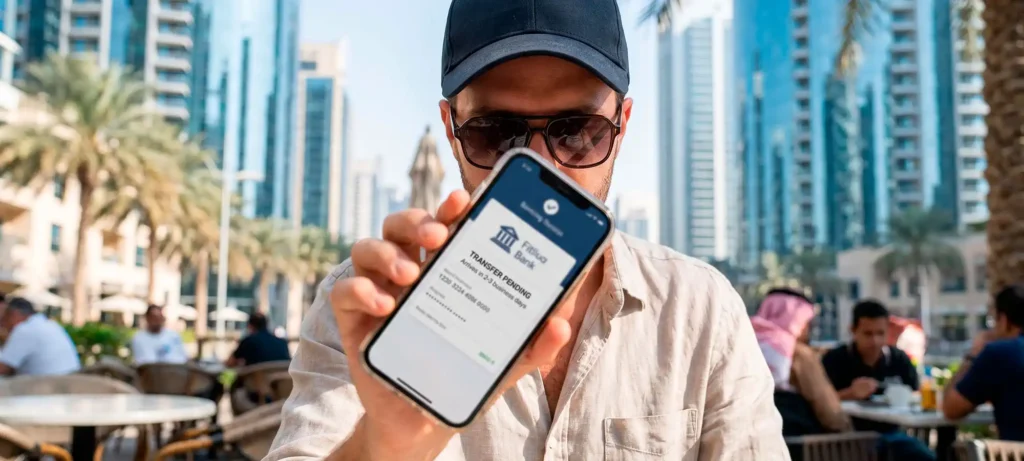
The buyer inspects the car, agrees on a fair price and then shows a receipt saying the transfer will take a few days to arrive.
A receipt on a phone is not money in your account.
You release the car because of a screenshot, and the money never comes.
A receipt only proves that someone has a picture of a transfer, not that money reached your account.
Check your own banking app, not the buyer’s phone.
Scam 2: The Fake or Altered Cheque
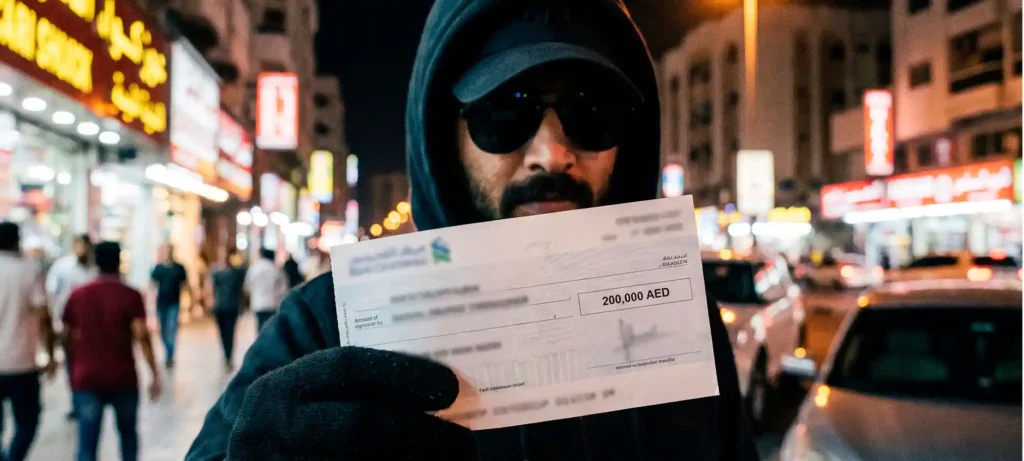
Some buyers offer a cheque instead of a transfer, and that is where many sellers get caught.
Dubai Police have arrested a gang that pretended to buy cars listed online and paid with fake cheques. The force urged sellers to receive payment before transferring ownership and to verify a cheque with the bank.
The Stories That Come With It
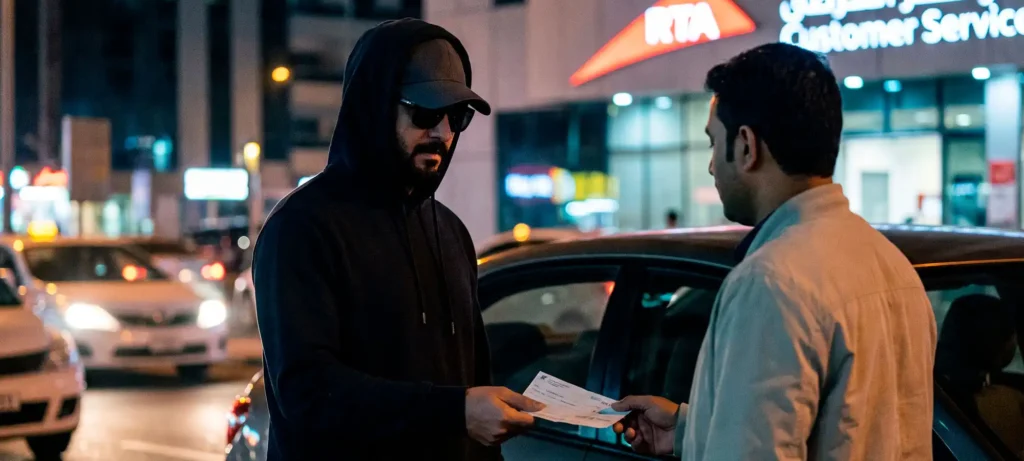
Sellers describe many versions of the story. A familiar one is a buyer who says they serve in the military or the coast guard, can only meet in the evening before a weekend, and pays with a cheque or a transfer slip that nobody can check until banks reopen.
The urgency and the unusual meeting time are part of the trick, because they leave you no chance to confirm the money.
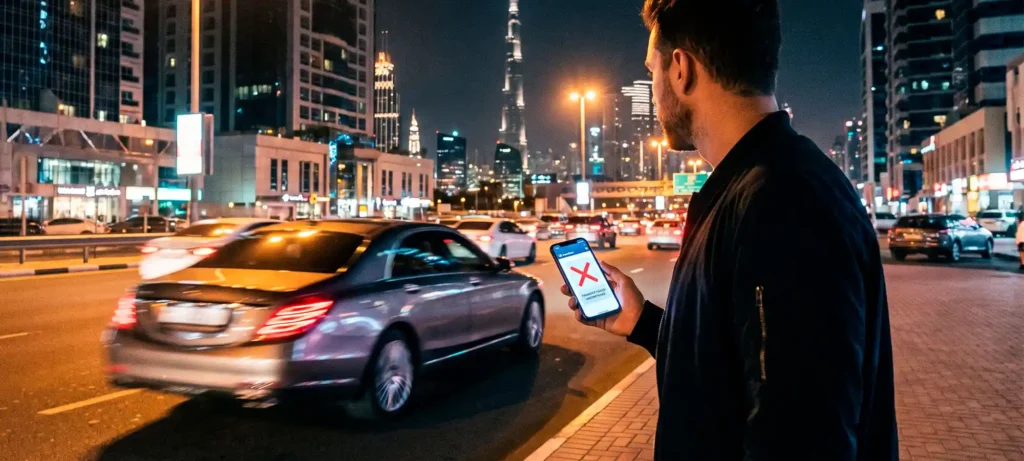
A cheque handed over at night cannot be checked until the banks open.
Deposits When Banks Are Closed
Sharjah Police have warned about criminals who agree on a price with a seller and then deposit a fake cheque through an ATM during a weekend or an official holiday, when banks are not processing transactions.
The seller then receives a real text message from the bank saying that a cheque has been deposited and is under collection, and some victims treat that message as payment and hand over the car.
Under collection means the cheque has not cleared yet, so the money is not yours until your bank confirms it.
A Cheque Can Change After You Receive It
In July 2026, Khaleej Times reported a Dubai Civil Court ruling in which a man had to repay Dh1.7 million after issuing a security cheque written with a special correction fluid. The details changed over time and the bank refused to honour the cheque.
That case involved a loan, not a car sale, but it shows that a cheque can look perfectly valid on the day you receive it.
A cheque is only a promise, and the bank decides whether it becomes money.
Scam 3: The Buyer Who Wants You to Pay for the Inspection
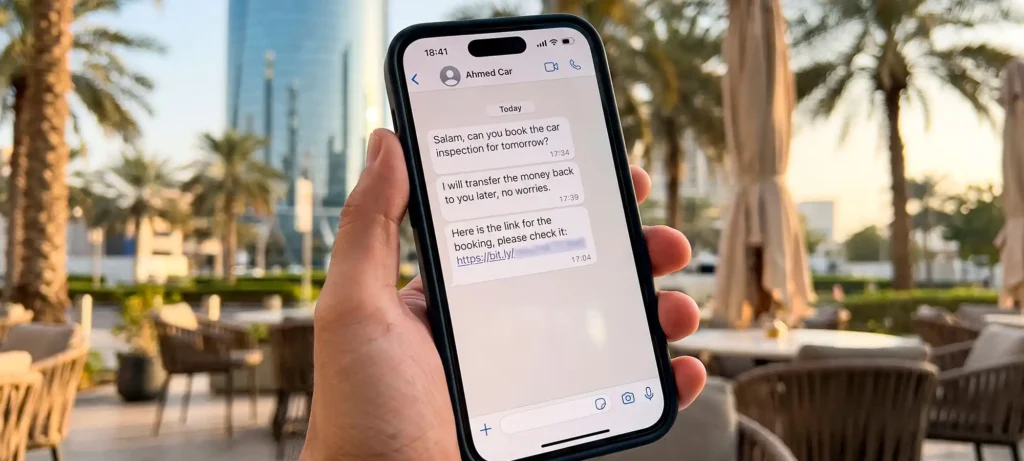
Some sellers report a polite and serious buyer who asks detailed questions, agrees to your price quickly and then sends a link to a paid vehicle inspection service.
The buyer insists that you order and pay for the report, promises to refund you when you meet and gets frustrated when you say no.
Typical excuses include a family member who does not trust sellers or a claim that only this one company is acceptable.
If you suggest alternatives, the buyer keeps finding new reasons or threatens to cancel the deal.
A genuine buyer pays for their own inspection or brings their own mechanic. Asking the seller to pay, especially through a link the buyer chooses, is a good reason to stop the conversation.
Many serious buyers also check a car’s background through official records, as explained in our guide to checking car history in the UAE.
We cannot verify every inspection service, so treat the request itself as the warning sign. Dubai Police also advise residents not to share personal or financial information through links sent in unsolicited messages.
Scam 4: Holiday Deals and Handover Spots Without Cameras
The Abu Dhabi Judicial Department has warned that scammers use bank closures during public holidays, and that they prefer handover places without security cameras. It advised residents not to conclude sale deals during official holidays.
A buyer who insists on meeting late in the evening, in a quiet parking area or right before a holiday is giving you a reason to slow down.
Choose a busy place with cameras, ideally a bank branch, and plan the handover for a day when you can confirm the payment with your bank.
Scam 5: Calls, Links and Messages After You Post Your Ad
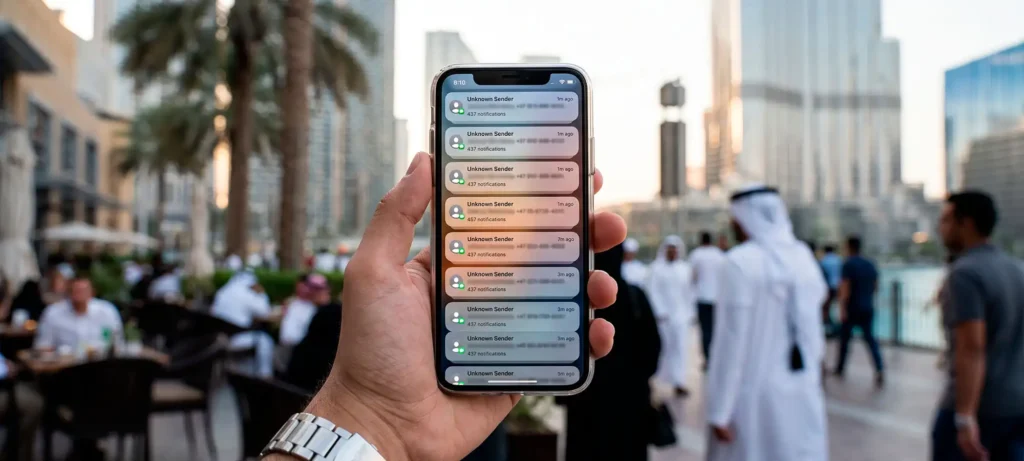
Some sellers say their phone started ringing with unrelated offers after posting on Dubizzle, including investment pitches and online job offers.
Other messages contain links or ask for personal details. In January 2026, Abu Dhabi Police warned that fake links on advertising and other platforms are being used to steal personal and financial data.
Be cautious of unexpected messages, suspicious links and requests for personal or banking information when selling your car online.
Police in Dubai and Abu Dhabi repeatedly warn residents not to share banking details, passwords or one time passwords (OTP), and not to click links in unexpected messages.
A buyer does not need your online banking password, OTP or card details to pay you for a car.
Share only what a buyer needs to see the car, and keep your Mulkiya and ID out of the photos in your ad.
Not Scams, But Still Warning Signs From Buyers
Not every difficult buyer is a scammer, but some patterns waste your time or lead to bigger problems.
A buyer who offers a bank transfer without seeing the car or negotiating at all.
An exchange offer from a profile that has posted a large number of ads, which often points to a trader rather than a private person.
A request that you come to their place for the viewing, sometimes with an offer to pay your fuel.
An offer far below your price, with a story about a relative buying the car.
Weeks of negotiation that keep reopening the price, for example because of the kilometres you drove while waiting.
A buyer who disappears at the last minute or prefers to talk only by message.
Ask for a phone call and suggest a meeting place you choose. Serious buyers usually agree.
How to Avoid Scams When Selling Your Car Step by Step
Speak by phone, and meet in a busy place with cameras during the day.
Let the buyer inspect and test the car, and let them pay for any inspection.
Receive the payment in your own account and confirm it in your own banking app.
If the buyer offers a cheque, ask your bank to verify it and wait until it has cleared.
Keep the car, the keys and the Mulkiya until you have the full amount. The exception is a sale where the buyer’s bank has issued an LPO. Here the bank, not the buyer, is committed to pay, but you should confirm the LPO directly with the bank. Our guide to selling a financed car in the UAE explains how this works.
Avoid closing the deal on an official holiday, when banks are closed and payments are hard to confirm.
Complete the ownership transfer only after the payment is confirmed. Our guide to selling your car in Dubai explains the transfer process.
Do not sign blank papers, and do not share OTPs or passwords.
Prefer to Skip the Private Market?
Most of the scams in this guide rely on a stranger who pressures a private seller into releasing the car before the money is real.
Selling to a dealer is one way to avoid that situation, because you deal with a business you can visit in person instead of an anonymous buyer from an ad.
If you are thinking of selling your car to Ready2Ride, you can request a cash offer or ask about a trade in on our sell your car page.
What to Do If You Think You Have Been Scammed
Contact your bank immediately. Dubai authorities advise this first so that transactions can be blocked.
In Dubai, you can report through the Dubai Police app, the eCrime platform or by calling 901. You can find the official services on the Dubai Police website.
In Abu Dhabi, you can call the toll free number 8002626, send an SMS to 2828, email aman@adpolice.gov.ae or use the official app. More details are on the Abu Dhabi Police website.
Keep the ad, chat messages, phone numbers, receipts and copies of any cheque as evidence, and report as early as you can, because delay helps scammers.
This article is general information and not legal advice.
FAQ: Car Selling Scams UAE
Check your own bank account or banking app and confirm that the full amount has arrived. A screenshot or receipt from the buyer is not proof of payment.
A cheque carries more risk than a confirmed transfer. If you accept one, ask your bank to verify it and wait until the funds have cleared before releasing the car. A message saying the cheque is under collection does not mean it has been paid.
Scammers can use any place where cars are advertised, and Abu Dhabi Police have described cases that begin with ads on social media. How you handle the payment and the handover matters more than the platform.
No. A buyer who wants an inspection should arrange and pay for it, or bring their own mechanic.
Contact your bank and report the case to the police straight away, using the Dubai Police or Abu Dhabi Police channels listed in this guide. Keep every message, receipt and document connected to the sale.
[…] that the payment has reached your account before you complete the transfer. Our guide to car selling scams in the UAE shows the tricks to watch […]
[…] This scam has enough specific warning signs, the excuses buyers use, the timing they rely on, exactly what the fake payment looks like, that it’s worth understanding in full before you list your car. We break the whole pattern down, with real examples, in our dedicated guide to avoiding car selling scams in Dubai. […]
Clear, practical answers for anyone buying, selling or driving a car in the UAE. From choosing between GCC and non-GCC cars to paying fines and keeping your car in shape in the heat.
Ready2Ride Motors offers a seamless used car buying experience in Dubai, with pre-inspected, accident-free vehicles and full transparency at every step. Explore our handpicked selection of GCC-spec cars and find your perfect ride today.