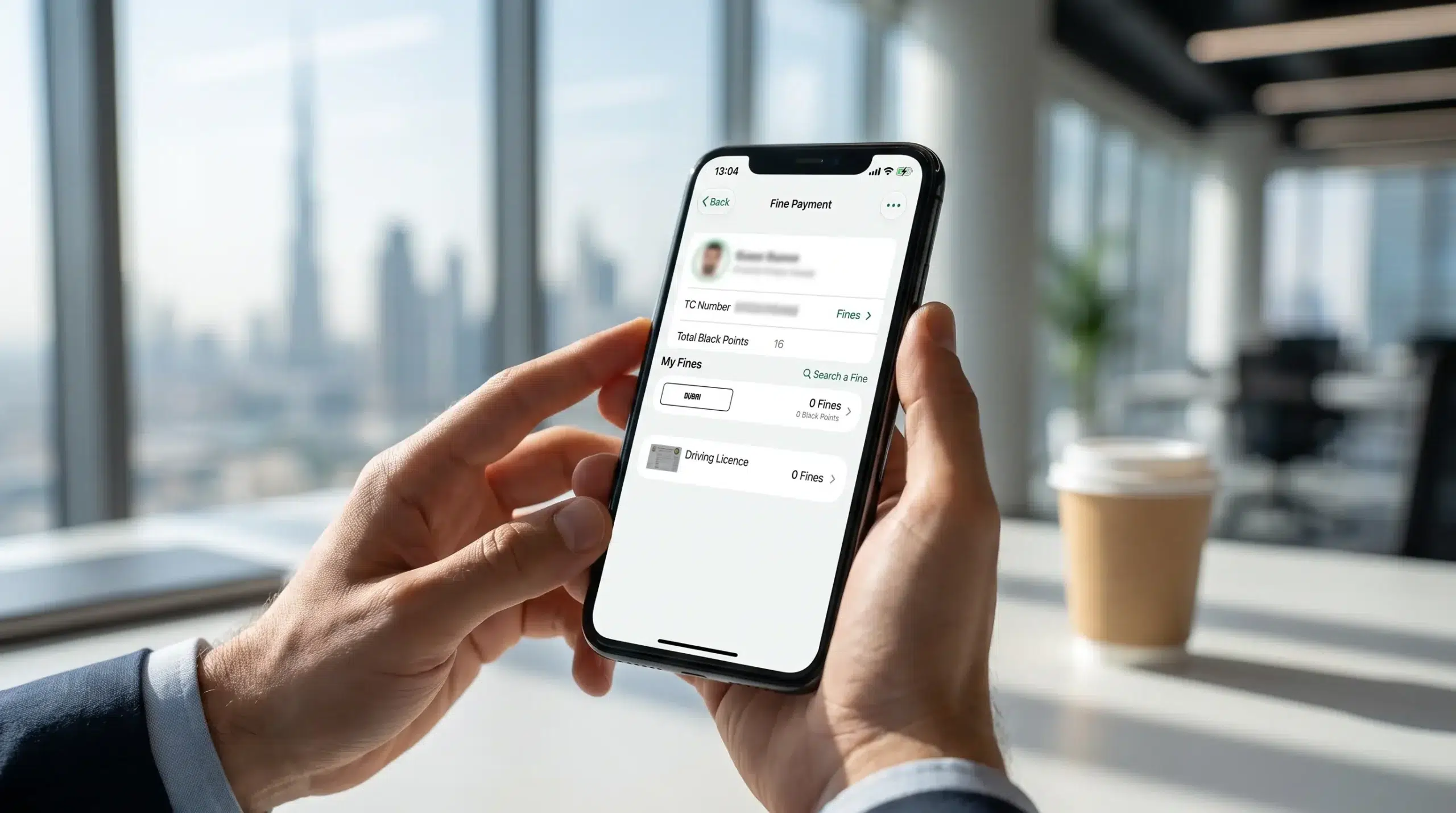
You get a fine, pay it and forget about it. But traffic violations in the UAE also add black points to your driving licence, and those points do not disappear when you pay the fine.
This guide explains how black points UAE drivers collect work: what they are, how to do a black points check in Dubai and Abu Dhabi, how to reduce or remove them through official channels and what happens at 24 points.
Black points are penalties added to your driving licence for traffic violations. Different violations carry different numbers of points, and they build up on your licence record.
Black points UAE wide work as one system, although the apps you use to check them can differ between emirates.
Black points are recorded against the driver’s licence, separately from the financial penalty for a traffic violation.
They belong to the driver’s licence, not to the car. That is different from fines, which are linked to the vehicle and can block services such as registration renewal.
The Dubai Police website lists the violations and the points attached to each one, so check the official list rather than relying on a table from a third party.
How to Check Black Points in Dubai
In Dubai, black points start with the fine, so the first place to look is the fine itself.
Step 1: See the Points on the Fine
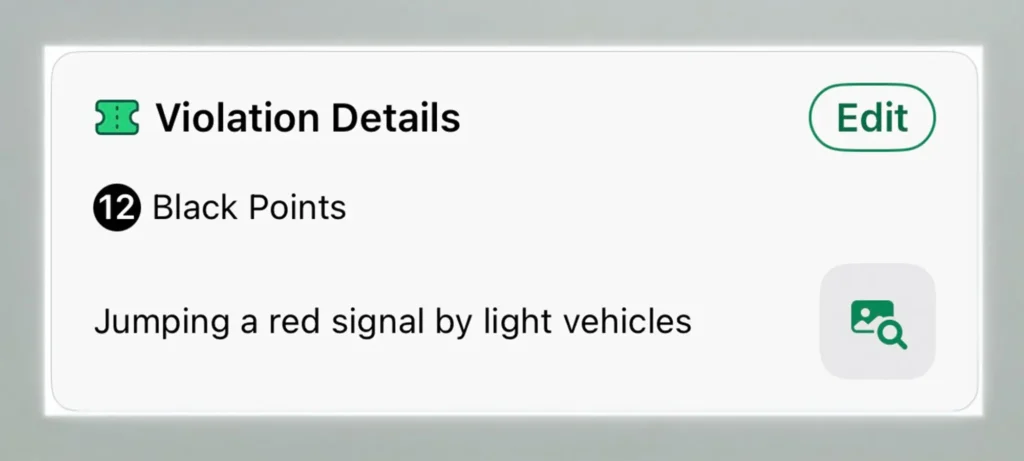
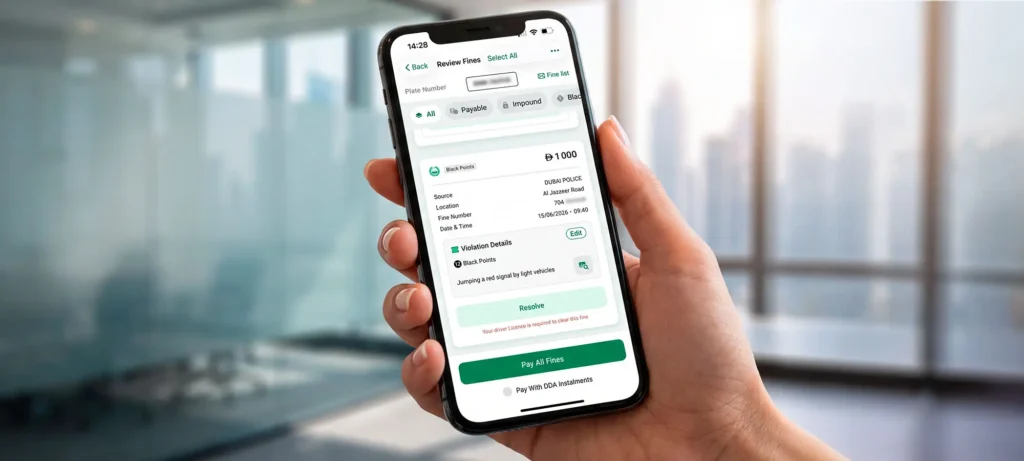
Open the Dubai Police app or website and check your fines. In our experience, a fine that carries black points says so on the fine, so you can see how many points you are about to receive before you pay.
Check the fine details in the Dubai Police app to see whether a traffic violation carries black points and how many apply.
Step 2: Link the Points to Your Licence
When you pay, you enter your driving licence number yourself. The black points are then attached to your licence, and you are taken to the payment page.
In the past, drivers had to visit the Traffic Department with their licence so the points could be attached manually.
Step 3: Check Your Licence Record
After that, you can do a Dubai driving license black points check in three ways:
The Dubai Police website or app. Log in with UAE Pass and open the licence services.
The RTA website or app. A Dubai RTA black points check is available in your RTA account under the licence services.
The MOI UAE app. It shows the points on your licence wherever you hold it.
Your record shows your total number of black points, not a list of separate violations.
Have your Emirates ID and UAE Pass ready, because most of these services use them to log you in.
When the Fine Comes With an Impound
Some violations also carry an impound, which means the car is taken off the road for a set number of days. In that case, in our experience the system does not let you do anything with the fine online until you have dealt with the impound first.
Some traffic violations involve both black points and vehicle impoundment, requiring drivers to resolve the impound before proceeding with the fine.
In Dubai you generally have three options:
Impound yard. The car is held at a police yard, and it is not free: many drivers assume it is, but a daily storage fee applies. A police officer told us it was AED 52.50 per day, which is roughly half the cost of paying to release the car. Fees can change, so confirm the current amount with the Dubai Police.
Smart Impound. You keep the car at home with a GPS tracking device fitted and you must not move it. The fee is AED 420, so confirm the current amount with Dubai Police.
Pay to release the car. You can pay AED 100 for each day of the impound period to free the car. A 30 day impound would cost AED 3,000, so this option adds up quickly.
In our experience, you may also need to visit the Traffic Department of the Dubai Police, where staff can link the black points and let you pay the fine, and you then settle the impound separately.
Black Points Abu Dhabi: How to Check Them
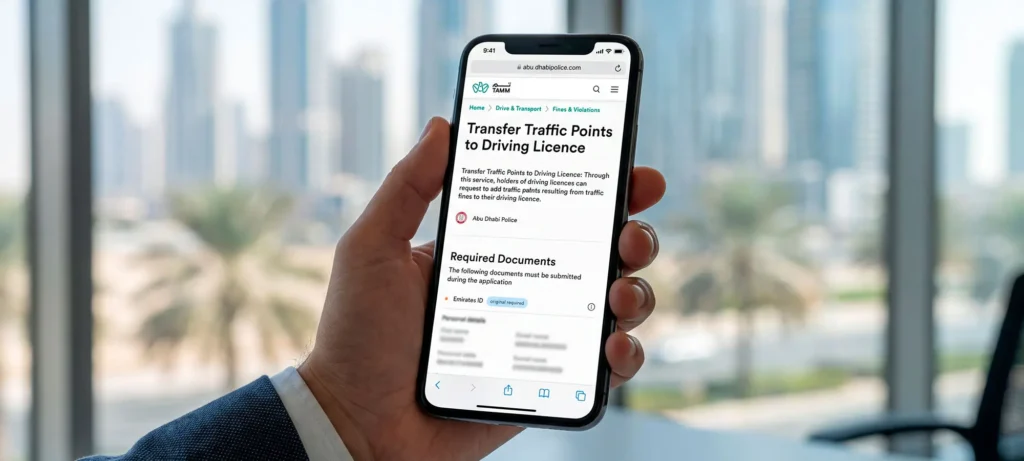
If your licence was issued in Abu Dhabi, you can check black points through the MOI UAE app, the Abu Dhabi Police website and app, or TAMM, signing in with UAE Pass.
The method is similar to Dubai: log in, open your licence record and look at your total black points.
Abu Dhabi also has its own smart impound service, which you can request through TAMM or at a police customer service centre.
A UAE driving license black points check also works the same way for the other emirates through the MOI services.
Abu Dhabi drivers can access traffic and driving licence services through the TAMM website using UAE Pass.
How Long Do Black Points Last?
Black points do not stay forever, and they generally expire automatically after one year.
Sources differ on how that year is counted: some say each violation has its own one year timer, while others say the year runs from your last violation. In our experience, the year was counted from the date we received our last points, and our record showed only the total number of points.
Check your own record and confirm the current rule with the police.
How to Remove Black Points From Your Licence
There is no secret trick. The official ways to reduce or remove black points are limited:
There is no secret trick. The official ways to reduce or remove black points are limited, and these are the main three.
Wait for the points to expire. They generally drop off after one year.
Take a traffic training course. In Dubai, you can sign up in the Dubai Police app under Traffic Services and Traffic Training Course, and choose the course for reducing traffic black points. It can remove up to 8 points, and the fee and conditions are shown in the app. In Abu Dhabi, the Abu Dhabi Police offers a Black Points Reduction Programme that you can book through its website or TAMM, and the fee and conditions are listed there.
Eligible drivers can explore official traffic training courses to reduce their black points.
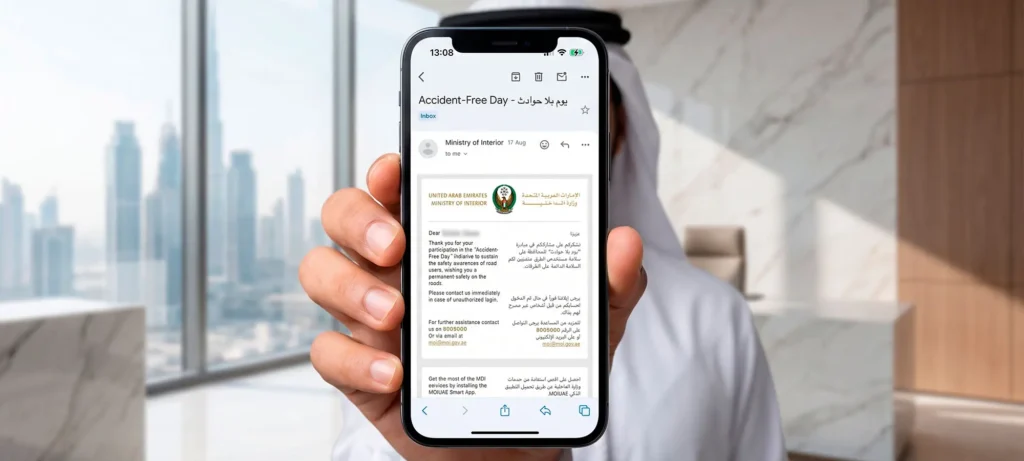
Join the Accident Free Day campaign when it takes place. This is an annual Ministry of Interior campaign held on the first day of the school year. You register through the official Ministry of Interior website using UAE Pass, sign a safety pledge and follow the conditions to qualify for a four-point deduction. The campaign is not available year-round, and taking part does not guarantee that your points will be deducted. In our experience, our points were not removed even two months after the campaign, despite meeting the conditions, so check your record rather than assuming the deduction has been applied.
Eligible drivers can register for the annual campaign through the Ministry of Interior and follow the required road safety pledge conditions.
Be careful with anyone who promises to delete points for a fee. Use only the official police and government services.
What If Someone Else Was Driving Your Car?
In Dubai, if someone else was driving your car when the violation happened, the owner can submit a request to move the black points to that driver through the Dubai Police services. The other driver needs to be licensed and has to accept the request.
This is a way to put the points on the person who actually drove, not a way to avoid them.
What Happens at 24 Black Points?
Reaching 24 black points within a year can lead to a licence suspension, and a violation committed after that can send the case to court, where the licence can be confiscated or suspended.
If you are close to the limit, check your record often and use the official courses before another violation adds more points. Rules can change, so confirm the current terms with the police.
Black Points and Your Car
Black points UAE drivers collect stay with the licence, so they do not travel with a car when you sell it. Unpaid fines are different, because they are linked to the vehicle.
If you are renewing your registration, our guide to RTA vehicle renewal in Dubai explains how fines can block it.
Black points are penalties added to a driver’s licence for traffic violations. They belong to the licence, not to the car, and too many of them can lead to a suspension.
Black points show on the fine itself in the Dubai Police app or website. When you pay, you enter your licence number so the points are linked to your licence, and then you can see them on your licence record through the Dubai Police, RTA or MOI UAE services.
Use the MOI UAE app, the Abu Dhabi Police website and app or TAMM, and log in with UAE Pass to see the total black points on your licence.
If the fine comes with an impound, the system may not let you do anything with the fine online until the impound is dealt with. You can leave the car at a police yard (a daily fee applies), keep it at home with Smart Impound or pay to release it, and in some cases the Traffic Department of the Dubai Police can link the black points and let you pay.
Only through official channels: a traffic training course offered by the police can remove up to 8 points, the annual Accident Free Day deducts 4 points for eligible drivers who meet all the conditions, and points expire after one year. Never pay a third party who promises to delete them.
Black points generally expire after one year. Sources differ on whether the year counts from each violation or from your last one, and in our experience it counted from the last points. Your record shows only the total, so confirm the rule with the police.
Reaching 24 black points within a year can lead to a licence suspension, and a violation committed after that point can send the case to court. Check the current rules with the police.
In Dubai, if someone else was driving your car, the owner can submit a request through the Dubai Police services, and the other driver needs to accept it. This is not a way to avoid responsibility, only to put the points on the person who drove.
No. Black points are linked to the driver’s licence, not to the car. Unpaid fines are different, because they can block the ownership transfer.
[…] linked to you as a driver. Fines that carry black points also say so on the fine. Our guide to black points in the UAE explains how the points are added to your licence and how to reduce […]
Clear, practical answers for anyone buying, selling or driving a car in the UAE. From choosing between GCC and non-GCC cars to paying fines and keeping your car in shape in the heat.
Ready2Ride Motors offers a seamless used car buying experience in Dubai, with pre-inspected, accident-free vehicles and full transparency at every step. Explore our handpicked selection of GCC-spec cars and find your perfect ride today.